Why the strakes?
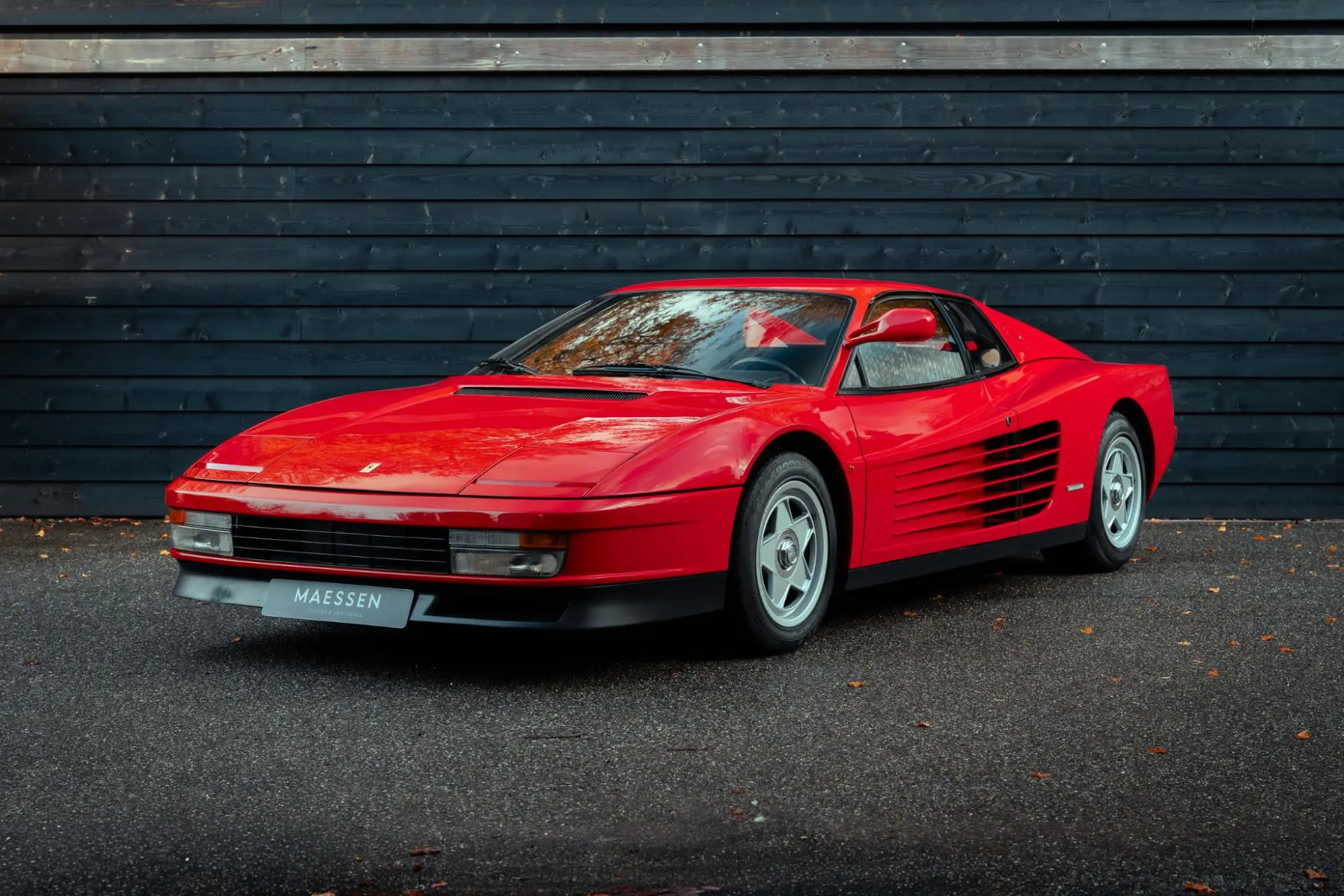
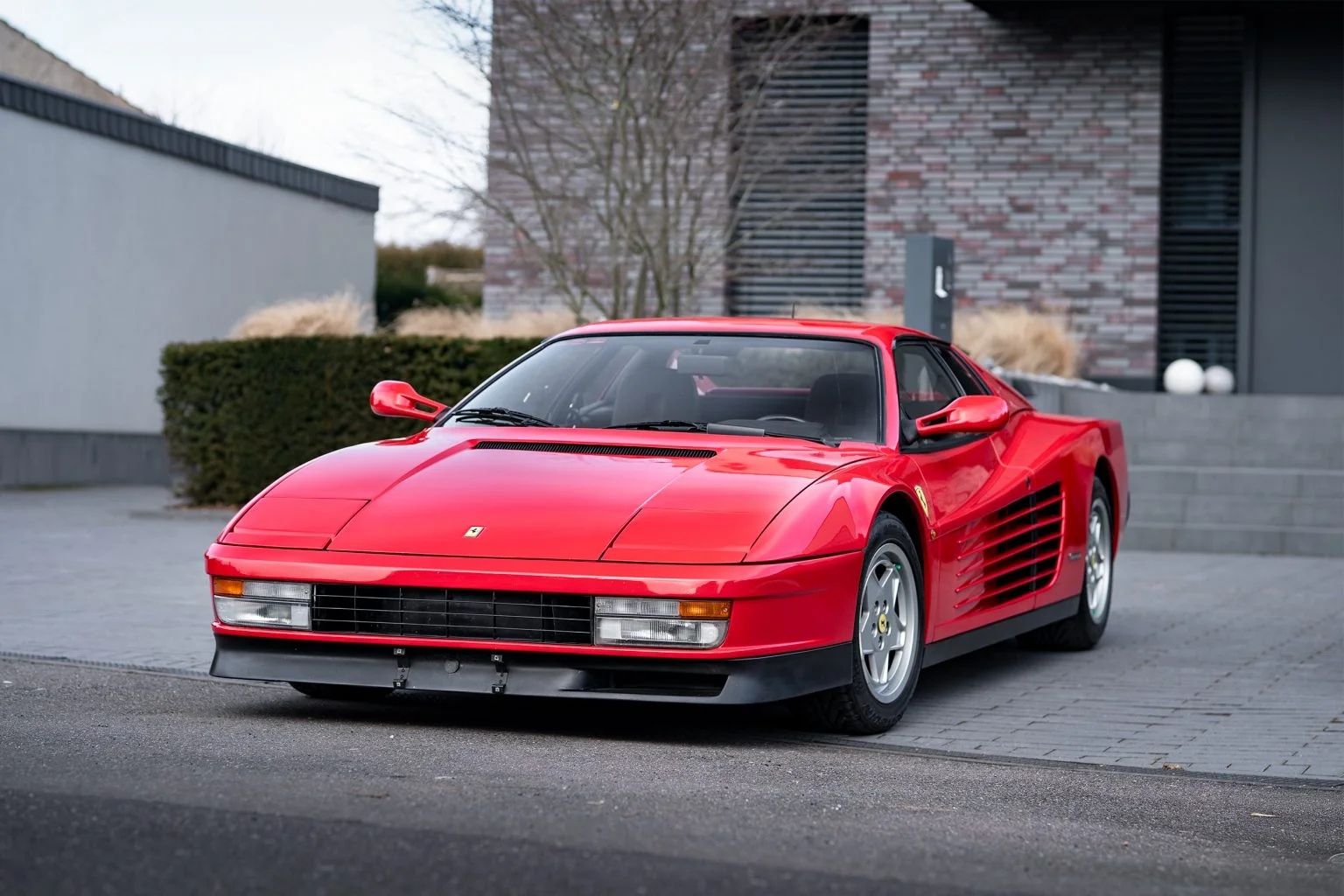
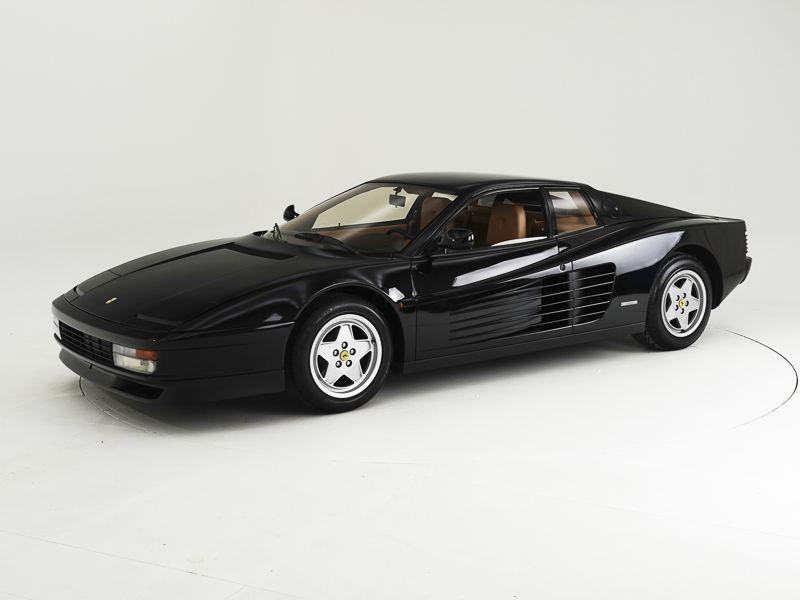
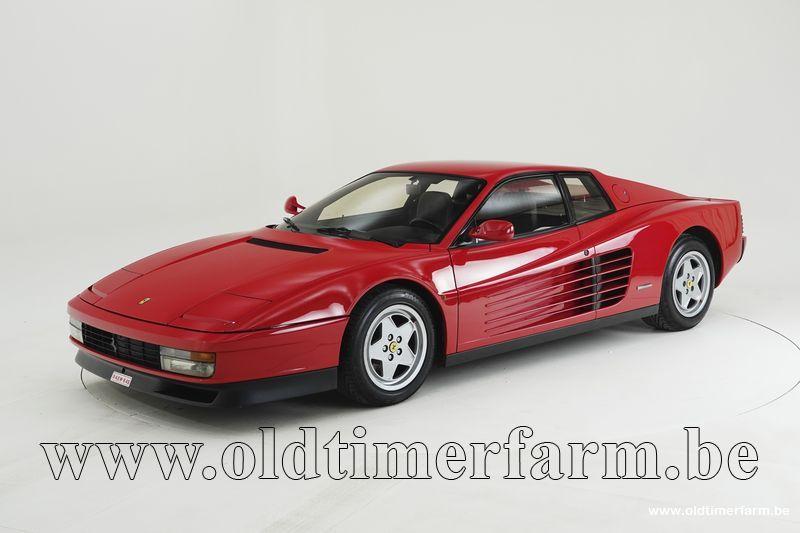
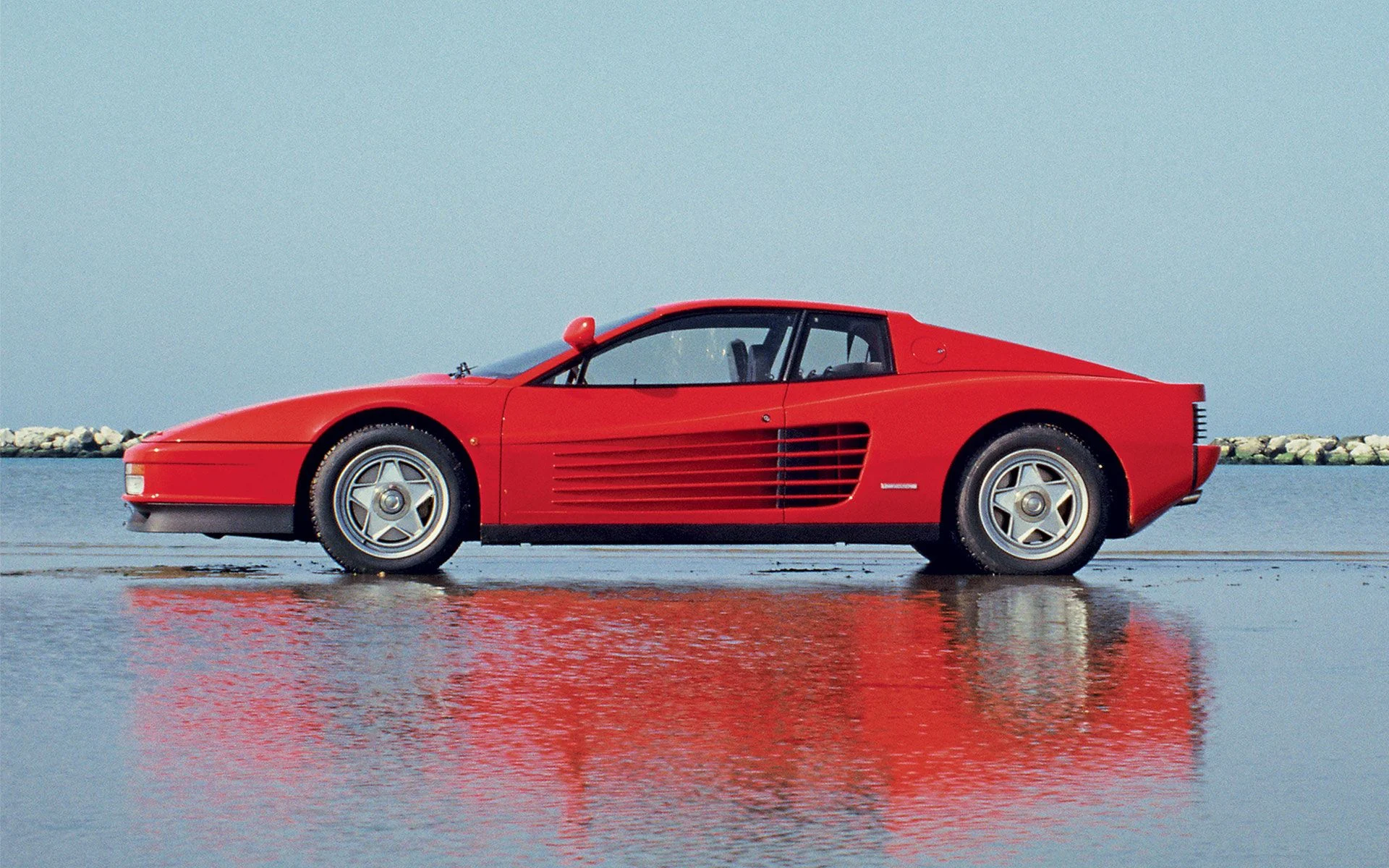
The Boxer had its radiator in the nose, so coolant pipes ran the length of the car and heated the cabin. For the Testarossa, Pininfarina and Ferrari moved twin radiators to the flanks just ahead of the rear wheels. That freed up the nose for luggage and kept the heat out of the cabin. The radiators needed large side intakes. As the story is usually told, rules in some markets restricted openings that size, and covering them produced the horizontal strakes, the most copied styling feature of the decade.
The name looks back to the 1950s. 'Testa rossa' means 'red head', after the red-painted cam covers of the 500 TR and 250 Testa Rossa racing cars, and the road car's engine wore red cam covers too. Strictly speaking that engine is a 180-degree V12 rather than a true boxer, since opposite pistons share crankpins. It displaced 4.9 litres and had four valves per cylinder.
Ferrari Testarossa
- Production
- 1984–1991
- Engine
- 4,943cc 180° V12 (flat-12), mid-mounted
- Power
- 390 CV at 6,300rpm (catalysed markets: slightly less)
- Torque
- 490Nm at 4,500rpm
- Gearbox
- Five-speed manual
- Built
- Approx. 7,177
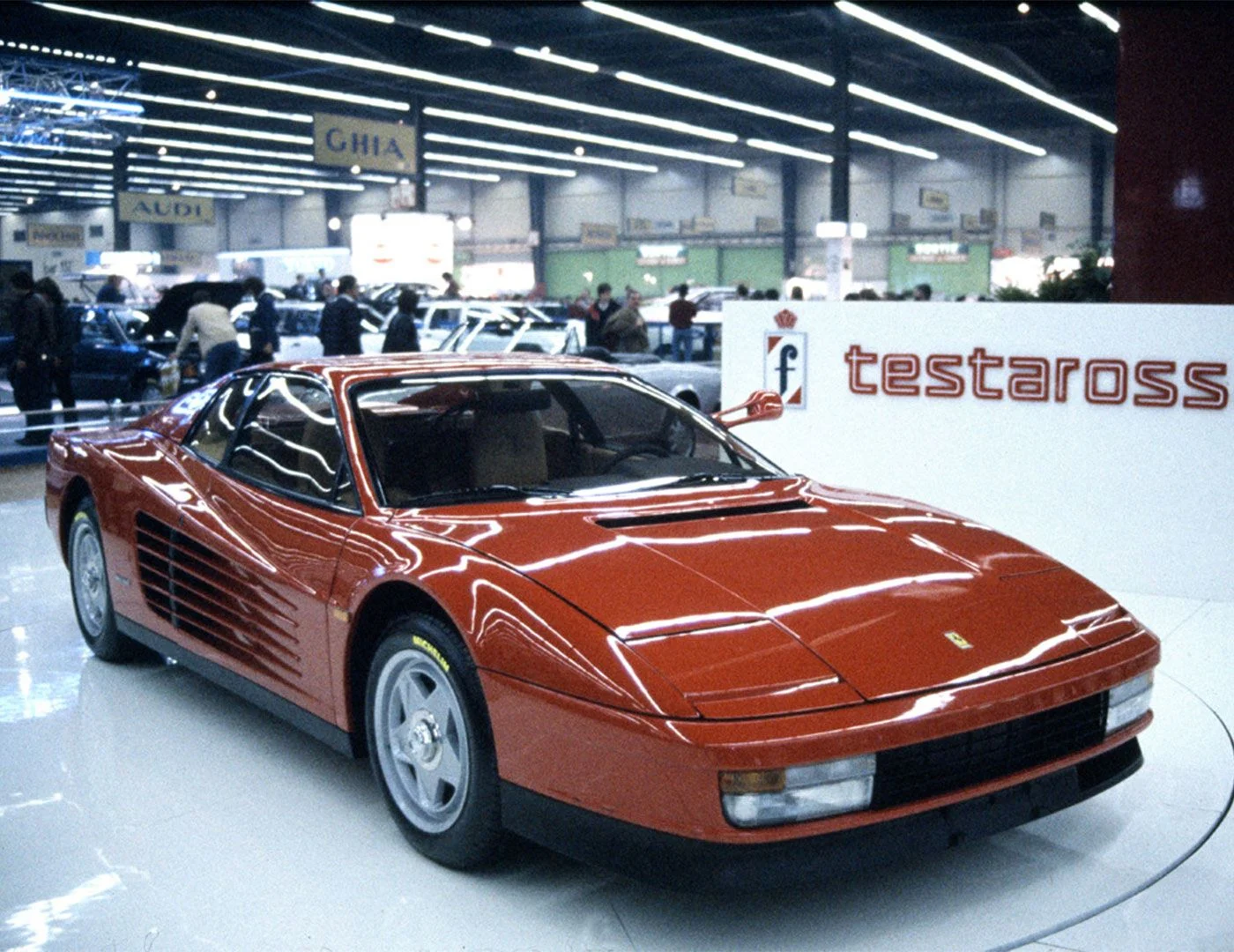
Photo: Ferrari S.p.A. (press image), source: ferrari.com
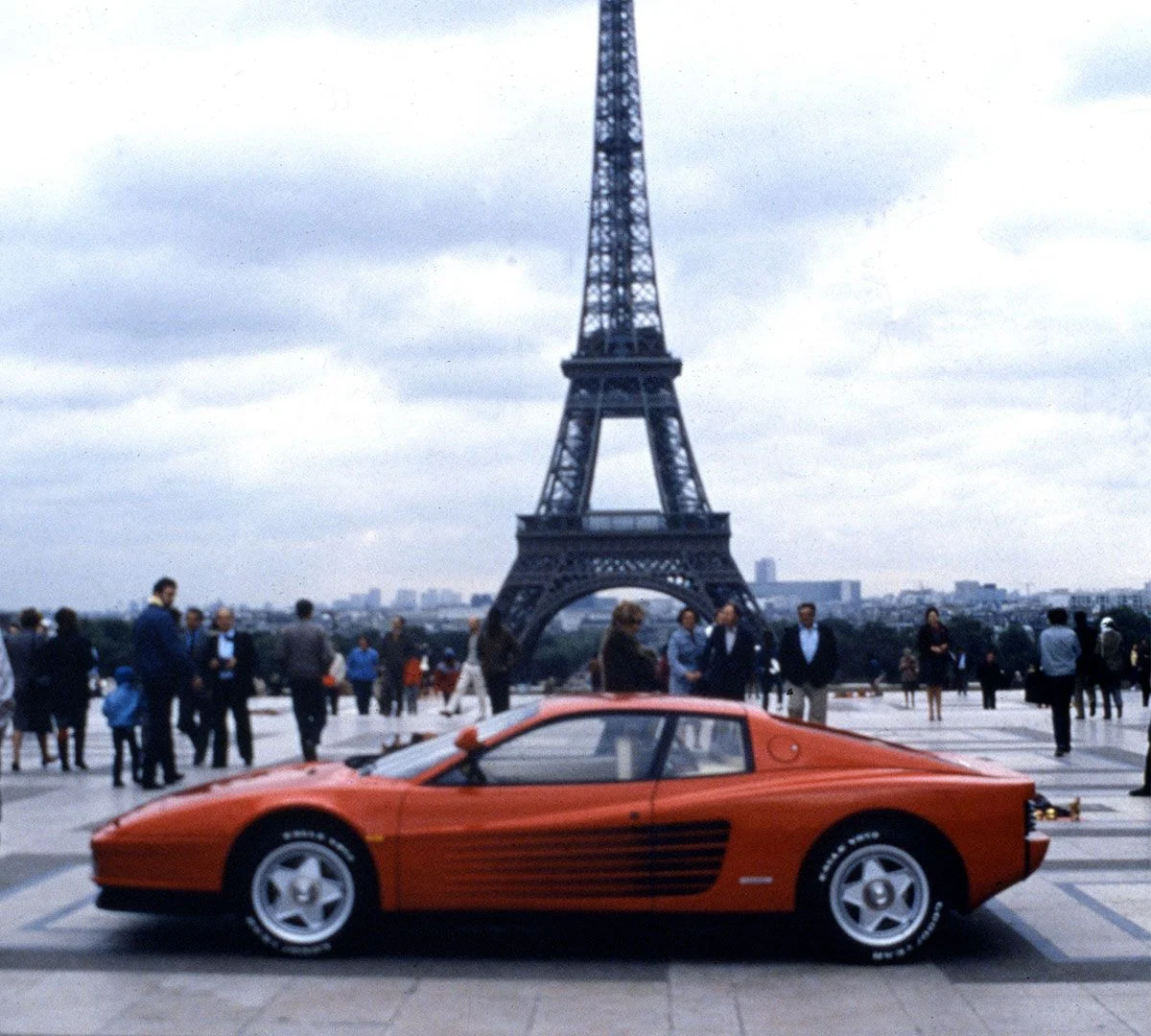
Photo: Ferrari S.p.A. (press image), source: ferrari.com
Monospecchio and monodado: the early cars
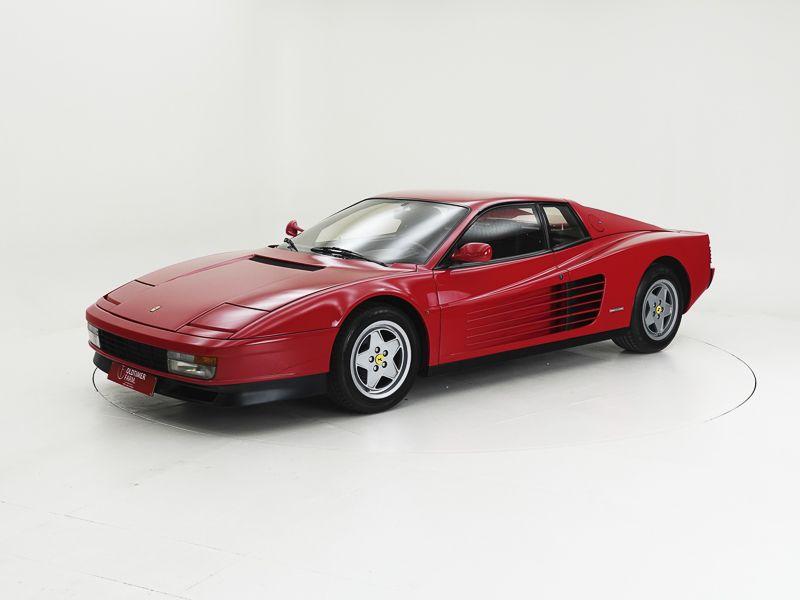
Collectors pay particular attention to the first Testarossas. Until 1987 the car had a single, high-mounted mirror on the driver's door, known in Italian as the monospecchio. Early cars also ran centre-lock wheels with a single central nut (monodado) on metric tyres. Ferrari moved to conventional mirrors on both doors, then to 16-inch wheels, and later in the decade to five-stud wheels with revised hubs.
These early details now carry a premium. The single mirror especially gives the car the clean side profile Pininfarina intended. There is a practical side as well: the original metric rear tyre went out of production, so check what an early car is running on. An original, well-documented monospecchio is the most desirable regular Testarossa.
512 TR: the driver's evolution (1991–1994)
By the end of the 1980s the Testarossa was being criticised for heavy steering and a cumbersome gearchange. Ferrari answered with the 512 TR, launched for the 1992 model year. The name went back to Ferrari's convention of capacity and cylinders (5 litres, 12 cylinders). The changes went deep. The engine sat lower in a stiffer frame and gained revised intake, new engine management and 428 CV. The gearbox shifted more easily, the suspension was retuned, the wheels were larger and the brakes stronger. Outside, a new nose with a smaller grille echoed the 348, and the cabin was modernised.
Many specialists see the 512 TR as the best car to drive in the trilogy. It is faster and sharper than the Testarossa and easier to live with. Around 2,260 were built.
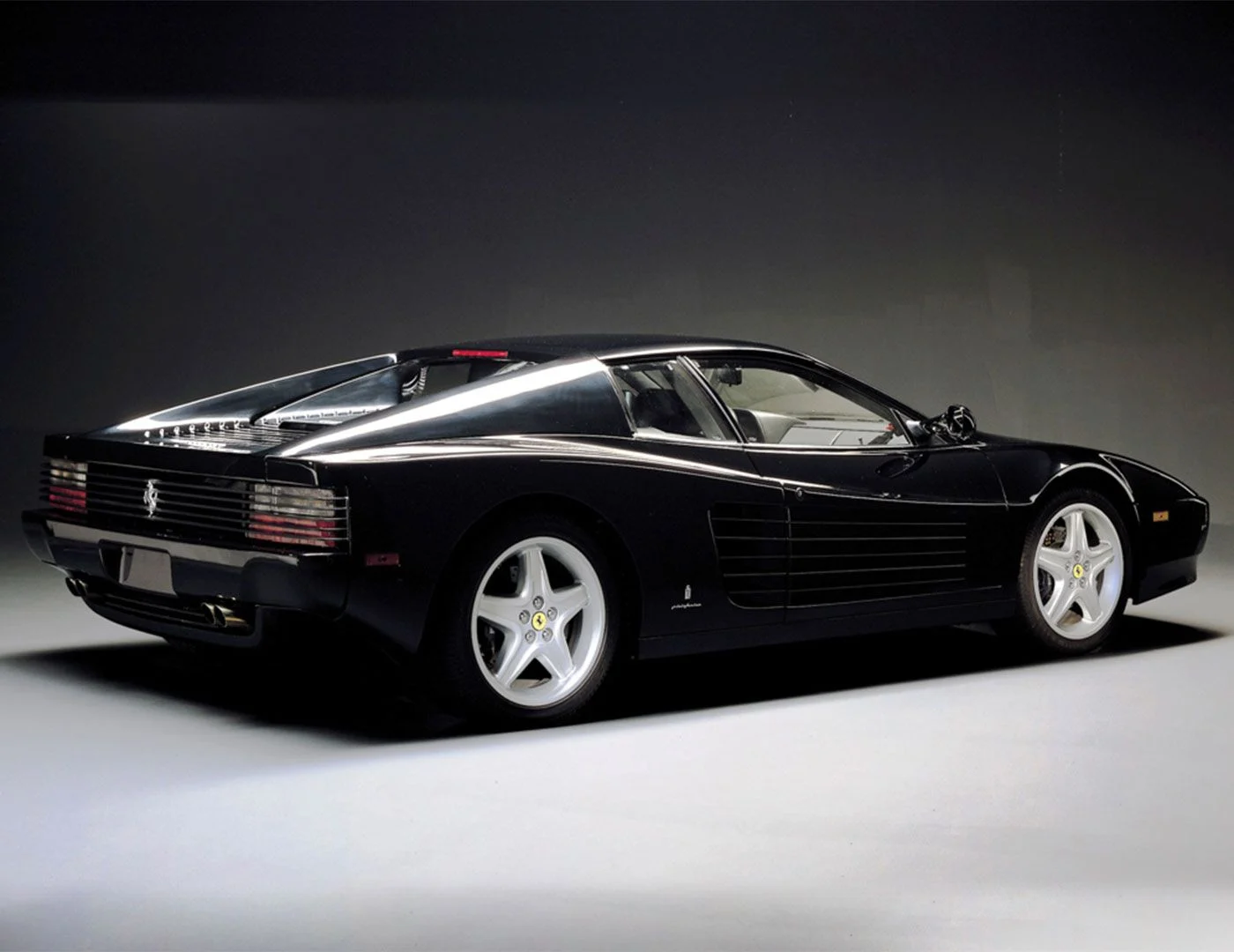
Photo: Ferrari S.p.A. (press image), source: ferrari.com
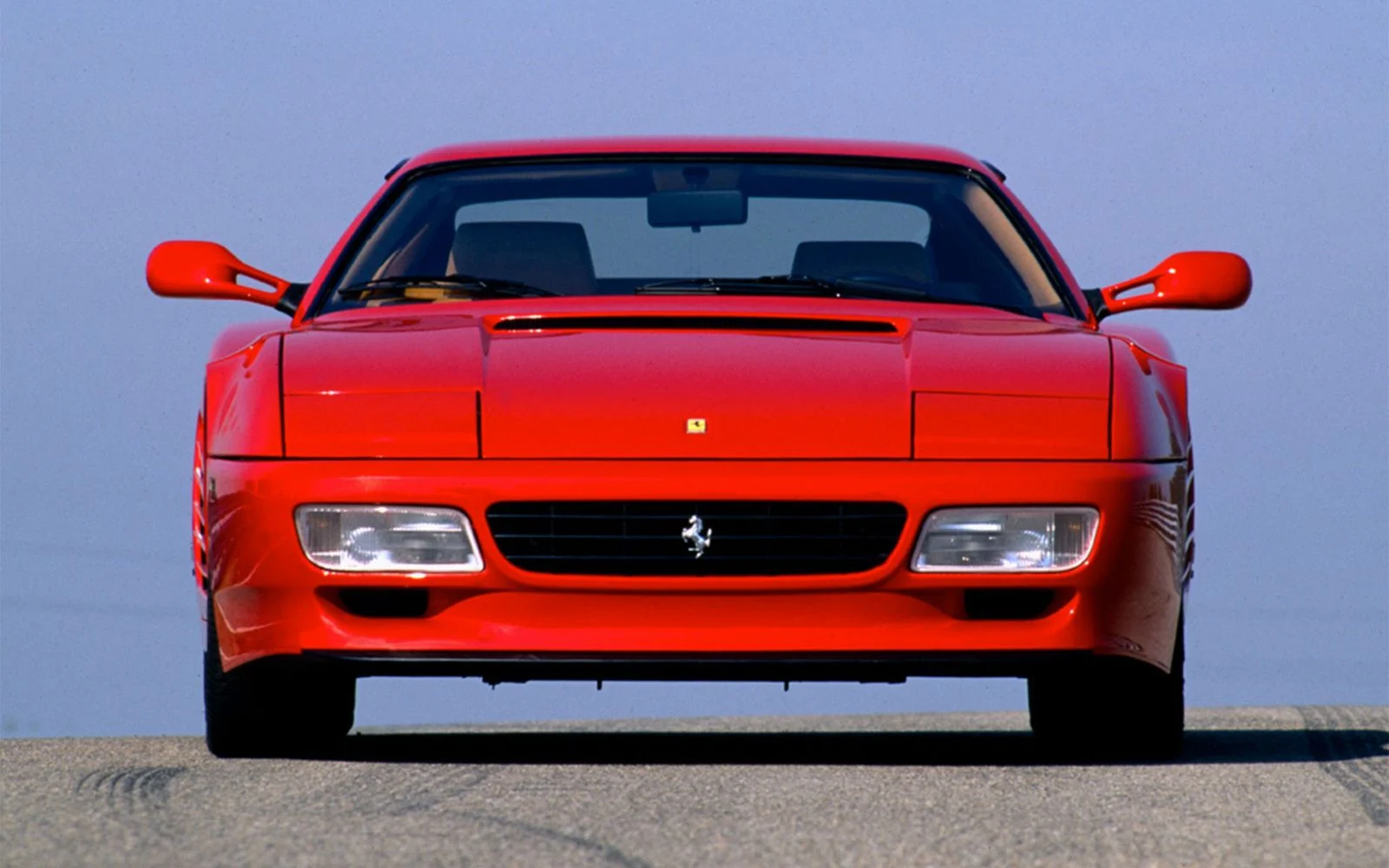
Photo: Ferrari S.p.A. (press image), source: ferrari.com
F512 M: the last of the line (1994–1996)
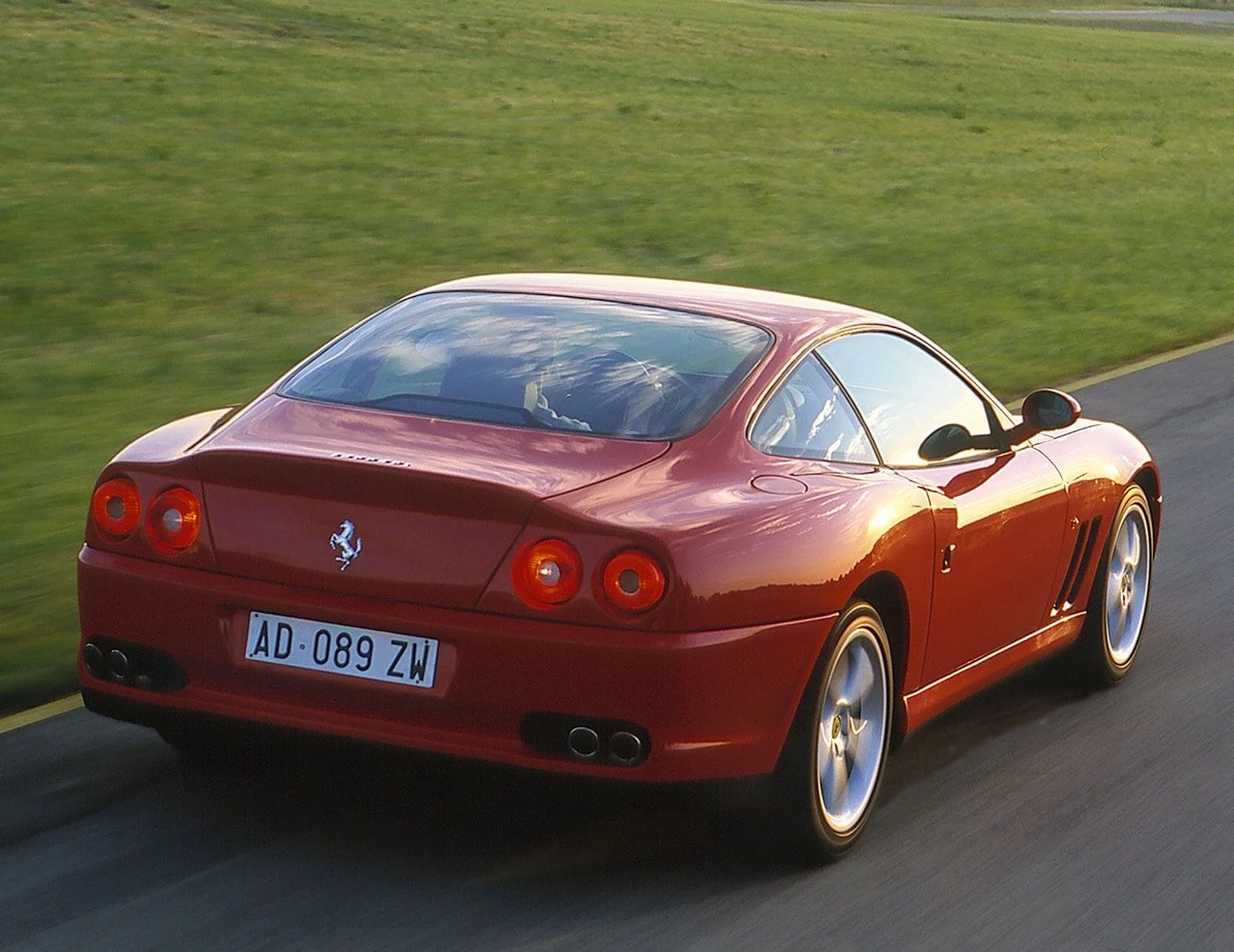
The final version arrived at the 1994 Paris motor show. Ferrari put an 'F' in front of the name and an 'M' for Modificata at the end, echoing the 512 S-to-512 M racing cars of 1970. The engine work was the most extensive of the series. It included lighter internals such as titanium connecting rods and a lighter crankshaft, and took power to around 440 CV. Outwardly the F512 M is easy to spot. Fixed, faired-in headlamps replaced the pop-ups, NACA ducts were let into the bonnet, and round tail lamps replaced the slatted rear panel.
Only around 500 F512 Ms were built, roughly one for every fourteen Testarossas. That makes it by far the rarest and most valuable of the three. A common rule of thumb in the trade: the 512 TR is the one to drive, the F512 M the one to collect, and an original early Testarossa the one for the pure 1980s experience.
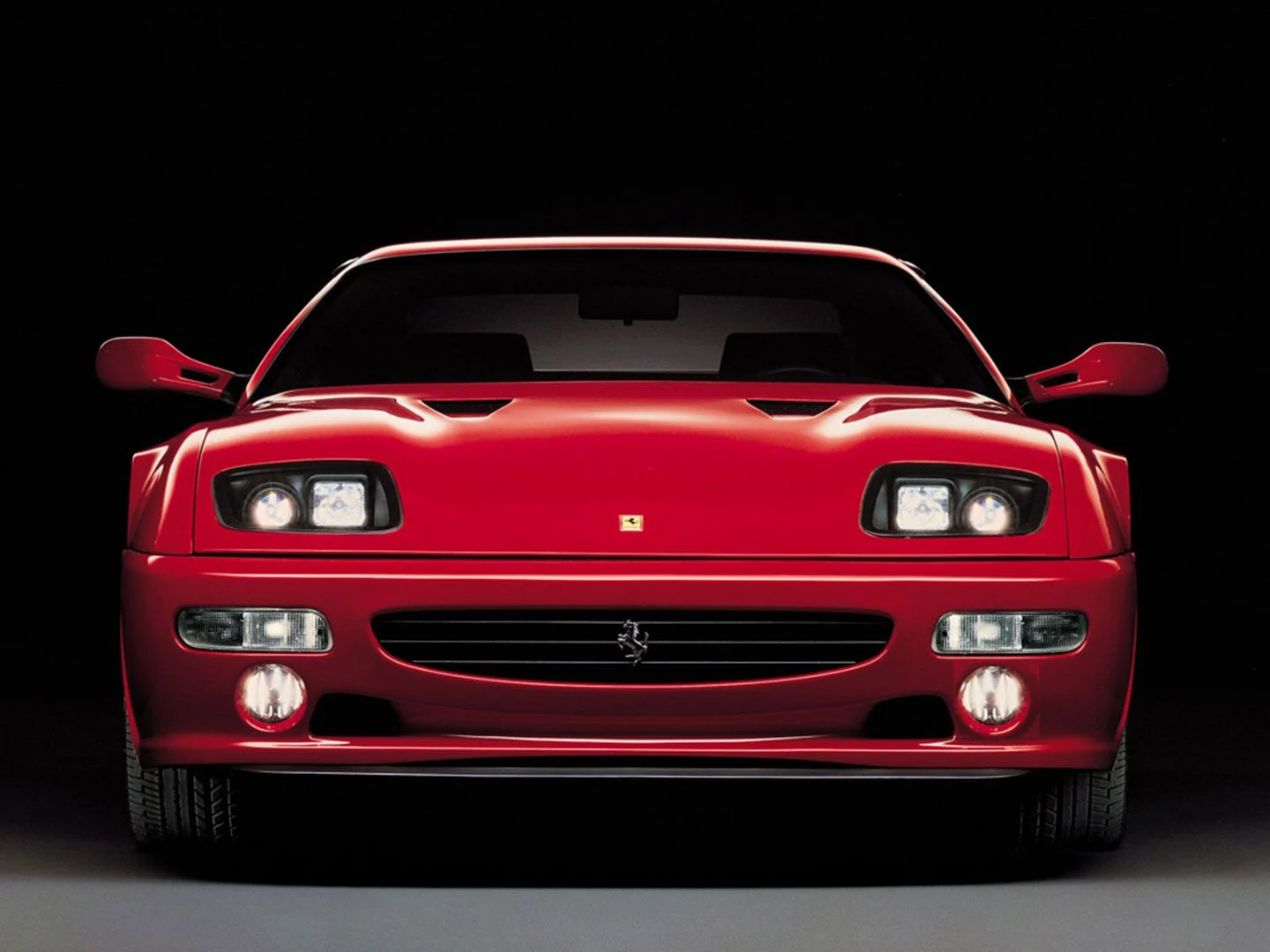
Photo: Ferrari S.p.A. (press image), source: ferrari.com
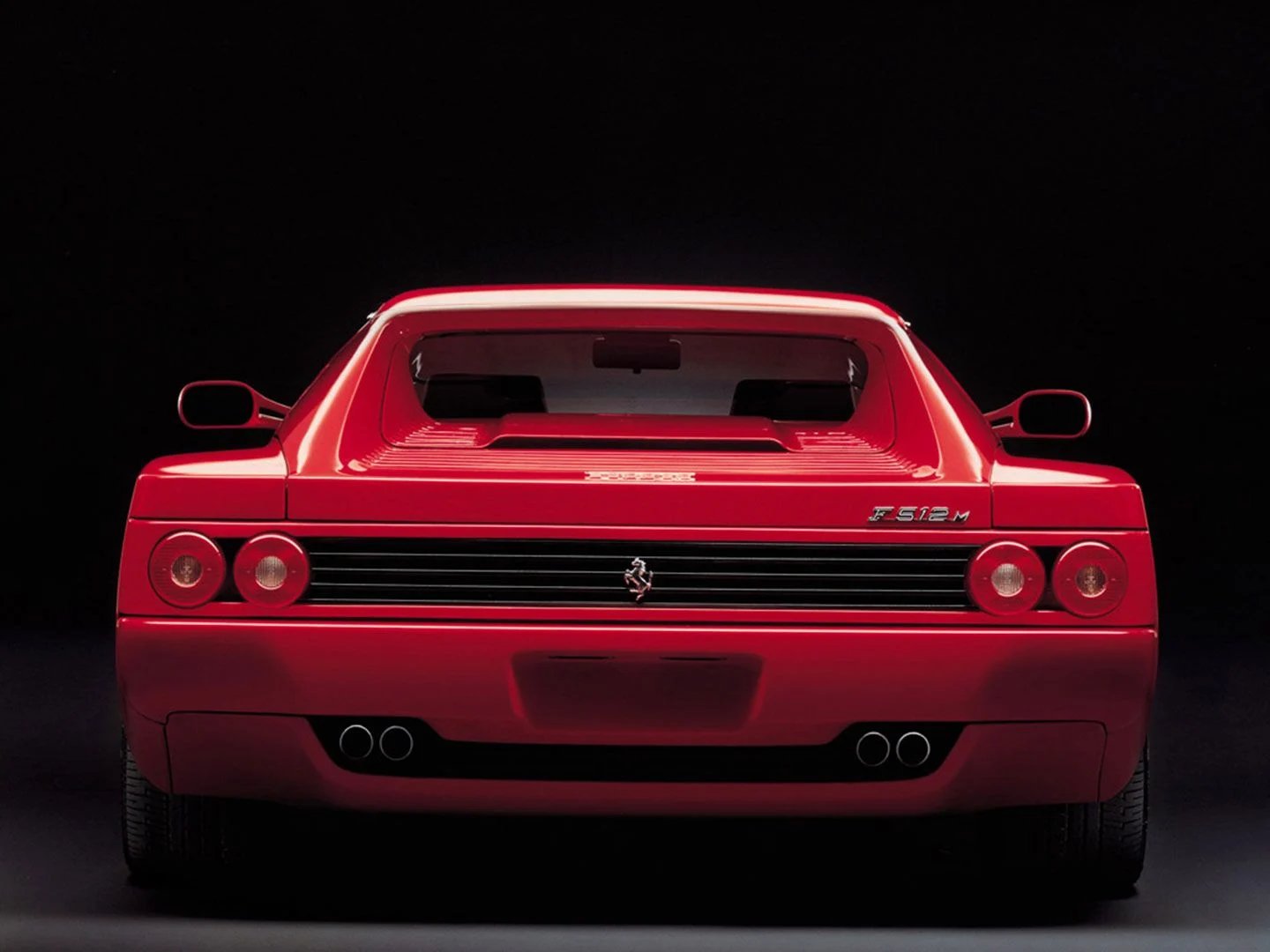
Photo: Ferrari S.p.A. (press image), source: ferrari.com
The trilogy at a glance
- Testarossa (1984–1991)
- 390 CV · approx. 7,177 built
- 512 TR (1991–1994)
- 428 CV · approx. 2,260 built
- F512 M (1994–1996)
- Approx. 440 CV · approx. 500 built
Buying one today
The big service item is the cambelts, and on these cars the engine and transaxle come out as one unit to replace them. This 'engine-out' service is the job that defines ownership costs. Specialists usually combine it with everything else that becomes easy to reach once the engine is out: seals, hoses, mounts, clutch and fuel lines. When it was last done, and by whom, is the first question to ask about any car.
- Service history and the date of the last engine-out belt service.
- Fuel metering on the Testarossa: infrequent use lets the injection system gum up, which causes poor starting.
- Gearbox: a notchy change when cold is normal on early cars, but grinding or jumping out of gear is not.
- Steering: the Testarossa is heavy at parking speeds. Some cars have electric power-steering conversions, so check whether a car is original.
- Original features: mirror type, wheel type and whether the exhaust is original matter to value on early cars.
- Right-hand drive cars are much rarer than left-hand drive. Classic & Sports Car quotes 438 Testarossas, 88 512 TRs and 41 F512 Ms in RHD for the UK.
The name lives on
In September 2025 Ferrari revived the name for its new flagship, the 849 Testarossa. This plug-in hybrid berlinetta replaces the SF90 and combines a twin-turbo V8 with electric motors for more than 1,000 CV. It has nothing in common with the flat-12 cars beyond the badge. But Ferrari's decision to bring the name back says a lot about where the original sits in the company's history, and it has put the original trilogy back in the spotlight.