From Group B to Group A
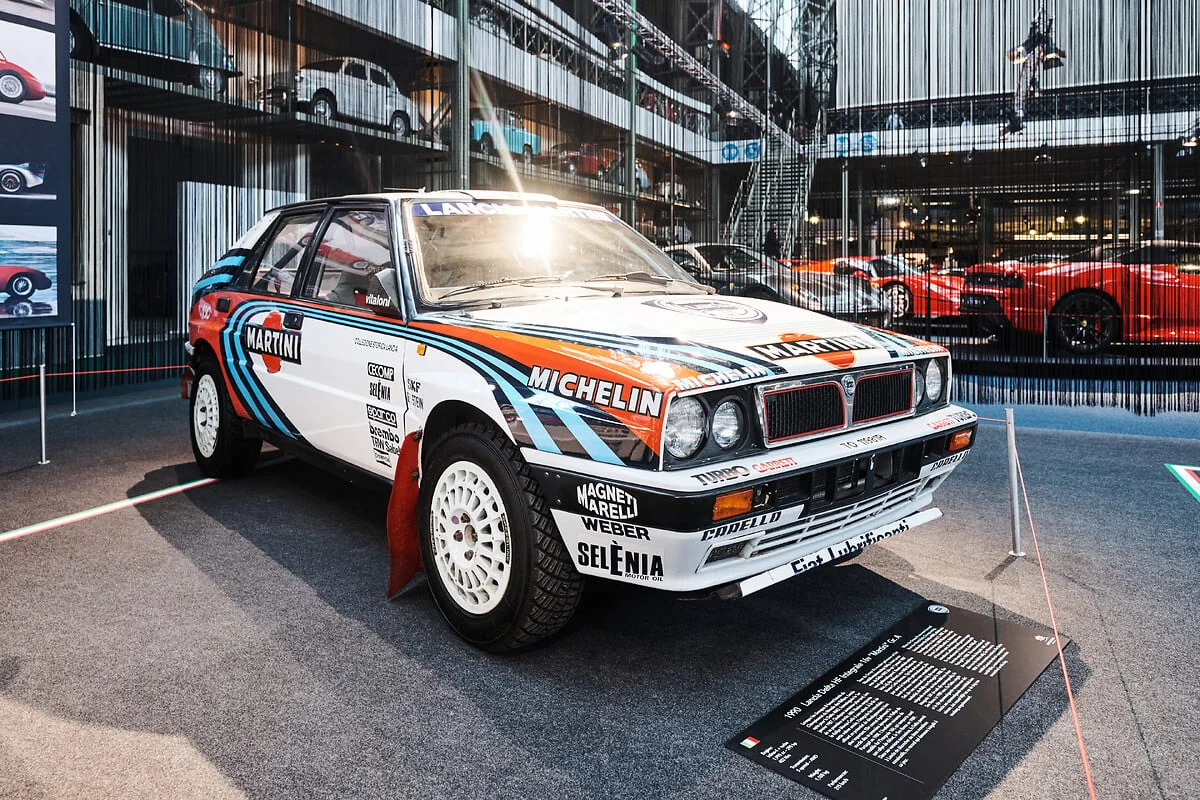
In 1986 a series of fatal accidents brought the Group B era to an end, including the crash that killed Lancia's Henri Toivonen and Sergio Cresto on the Tour de Corse. From 1987 the World Rally Championship would be run to Group A rules, which required cars to be based on models built in thousands. Lancia's answer was already on sale: the Delta HF 4WD, with a 2.0-litre turbocharged four-cylinder engine and permanent four-wheel drive.
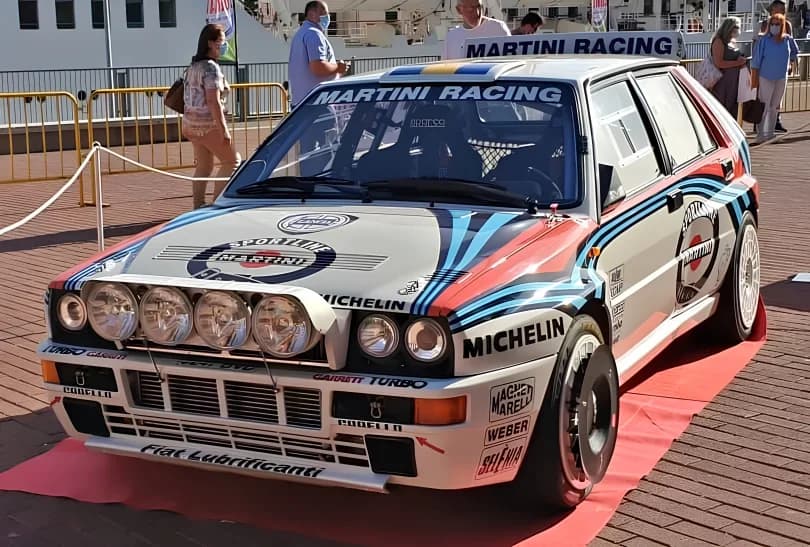
The result changed rallying. The Delta took the manufacturers' title in 1987, and Lancia went on to win it six years in a row, through 1992. No other car has matched that run. Juha Kankkunen (1987 and 1991) and Miki Biasion (1988 and 1989) also won the drivers' championship in Deltas. After 1991 Lancia scaled back its works effort, and the 1992 title was won with the Martini-liveried cars run by the Jolly Club.
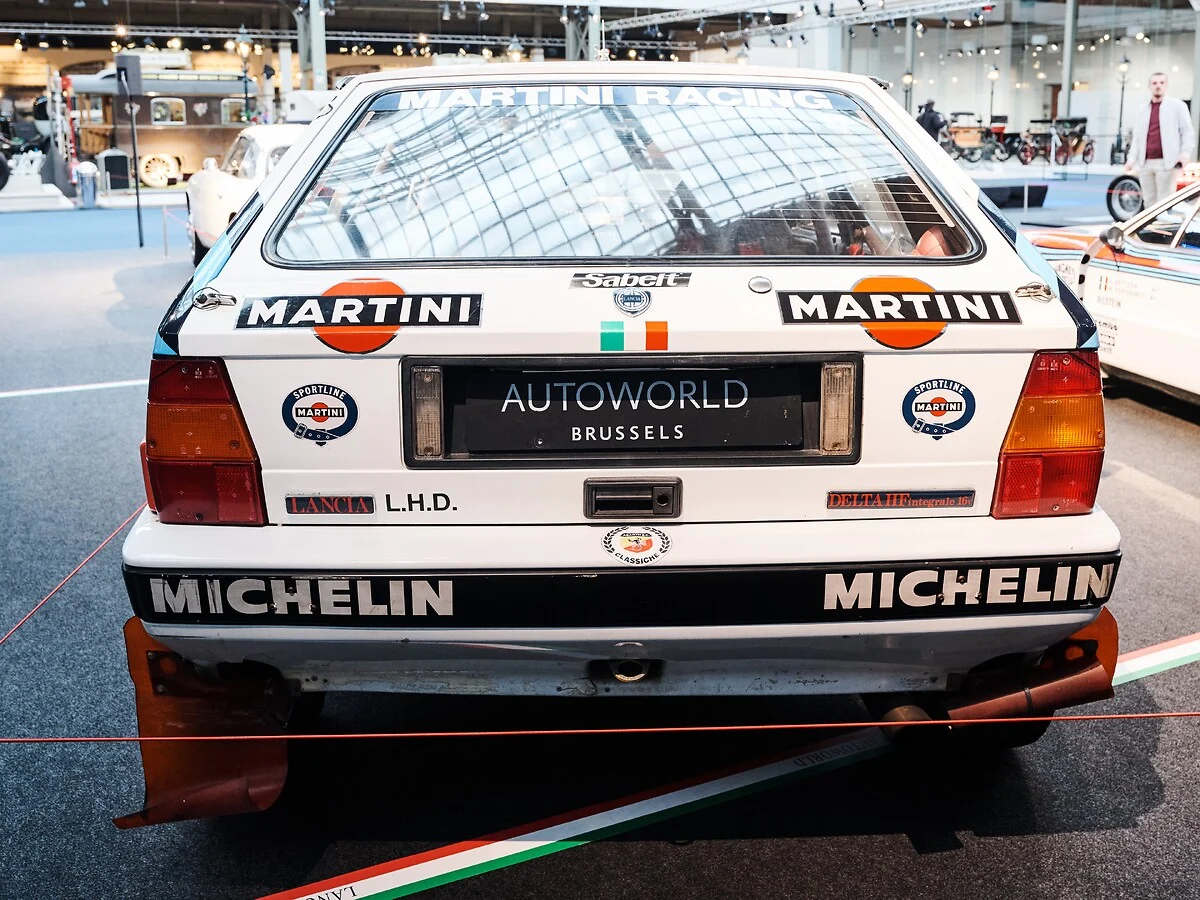
Photo: Stellantis Heritage (press image), source: Stellantis Media
The road-car generations
Every step of development on the stages had to be matched by a homologated road car. As a result the Delta changed almost every year, and each version can be recognised by its arches, bonnet and badges.
Delta HF generations
- HF 4WD (1986–1987)
- 2.0 turbo 8V · 165 CV · narrow body
- HF Integrale 8V (1987–1989)
- 185 CV · flared arches, bigger brakes and wheels
- HF Integrale 16V (1989–1991)
- 200 CV · 16-valve head, bonnet bulge, rear-biased torque split
- HF Integrale Evoluzione (1991–1993)
- 210 CV · wider tracks and arches, adjustable roof spoiler
- HF Integrale Evoluzione II (1993–1994)
- 215 CV · catalyst, revised engine management, 16-inch wheels
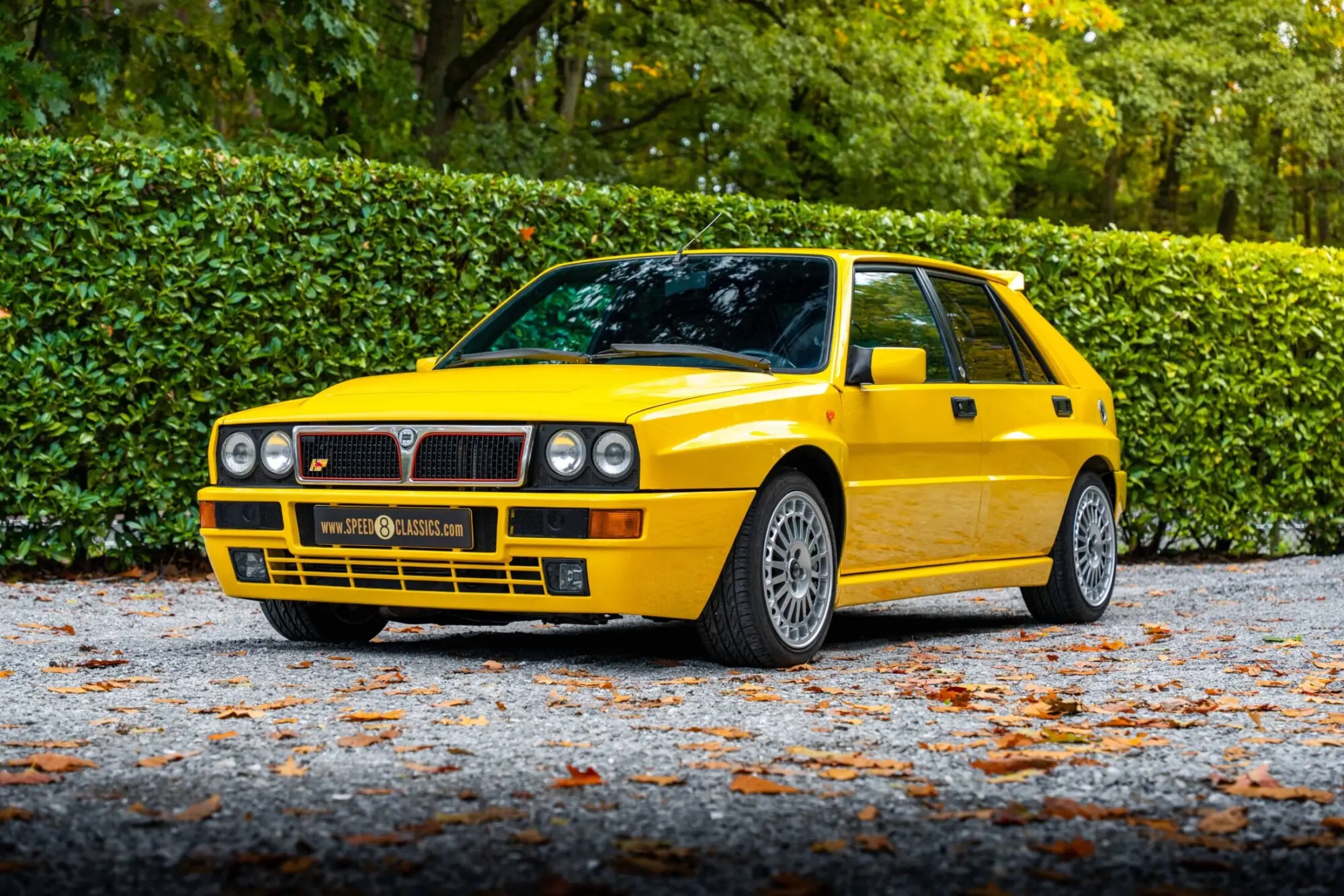
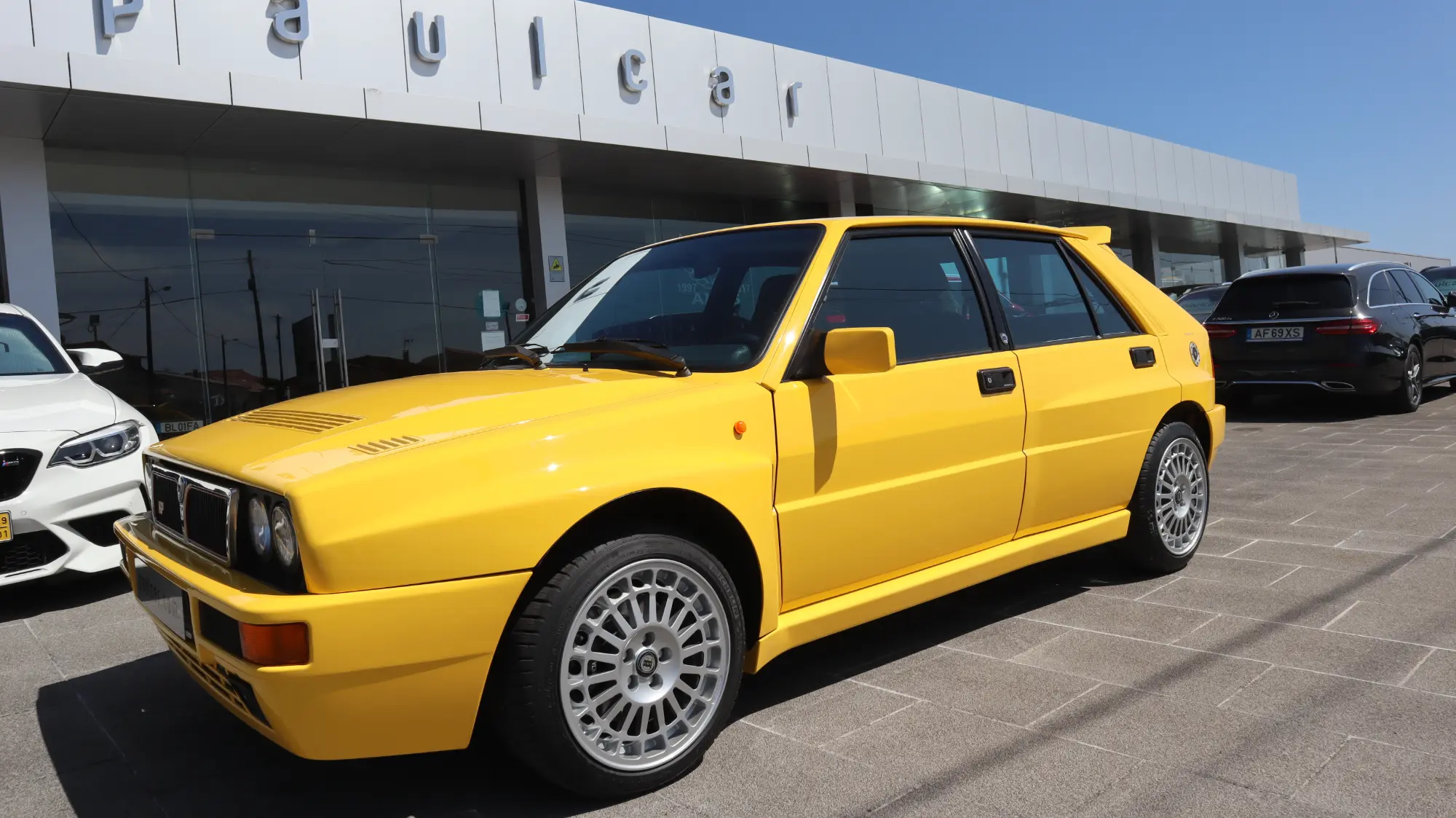
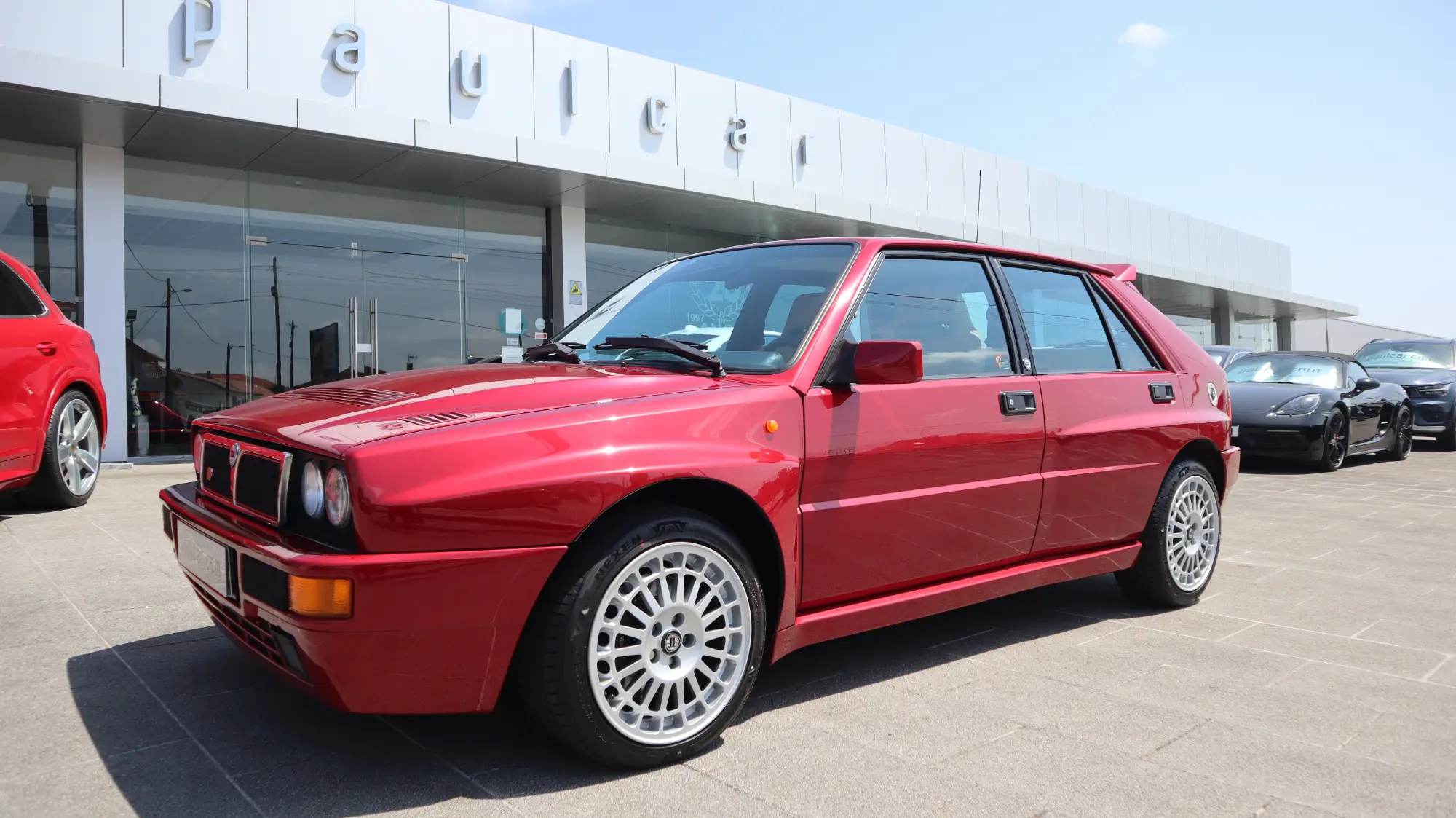
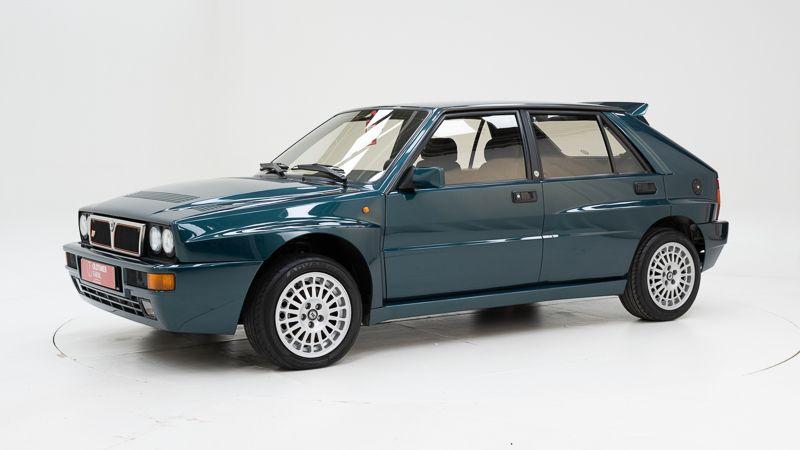
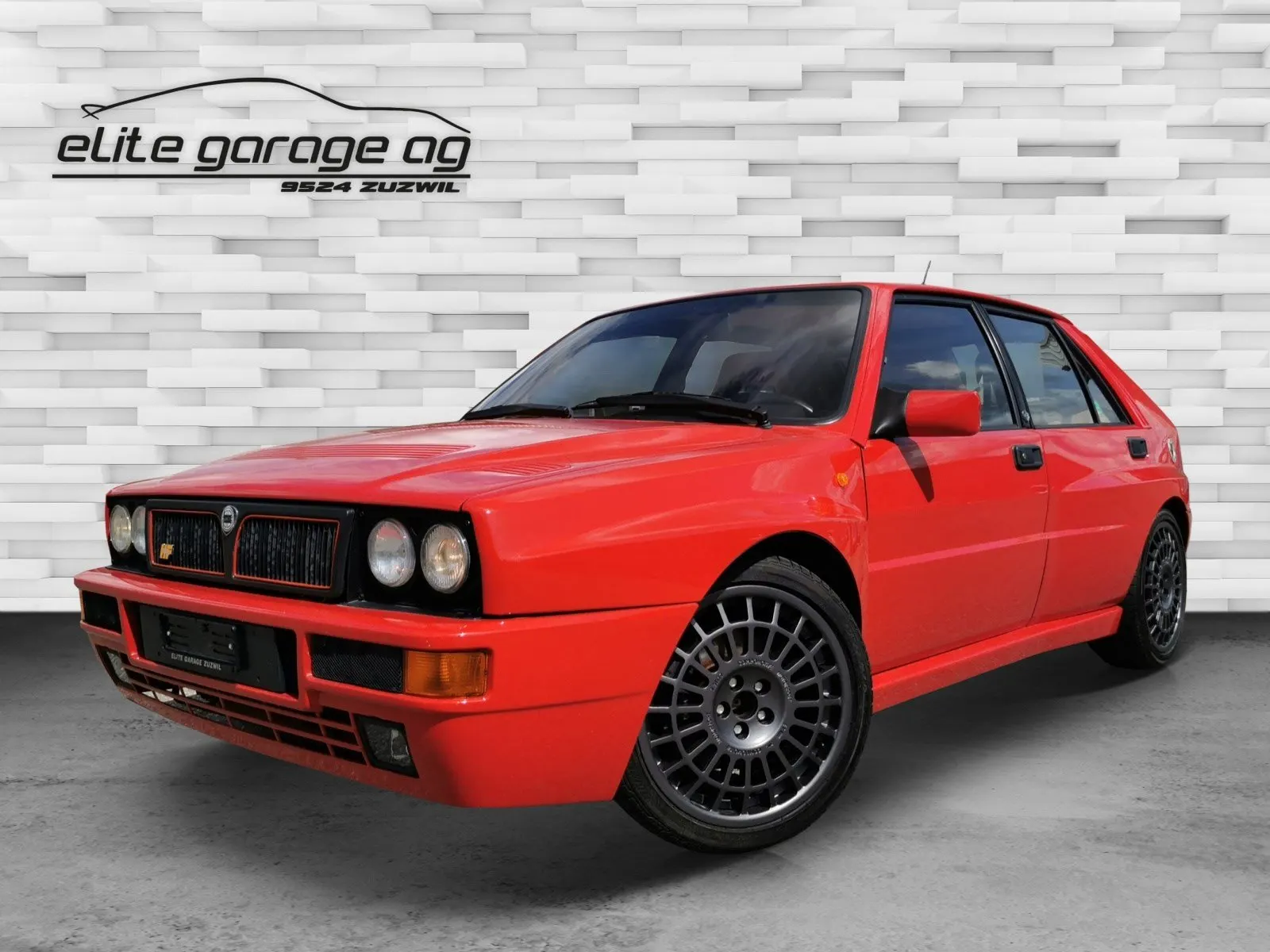
The Evoluzione, often called the 'Evo' or 'Evo I', was the last true homologation version. Its wider bodywork became the image most people have of the car. The Evoluzione II was never developed into a works rally car. Instead it was a road car celebrating the six titles. Assembly of the final cars moved to Maggiora, and the last Integrale was built in November 1994. All Evo IIs were left-hand drive.
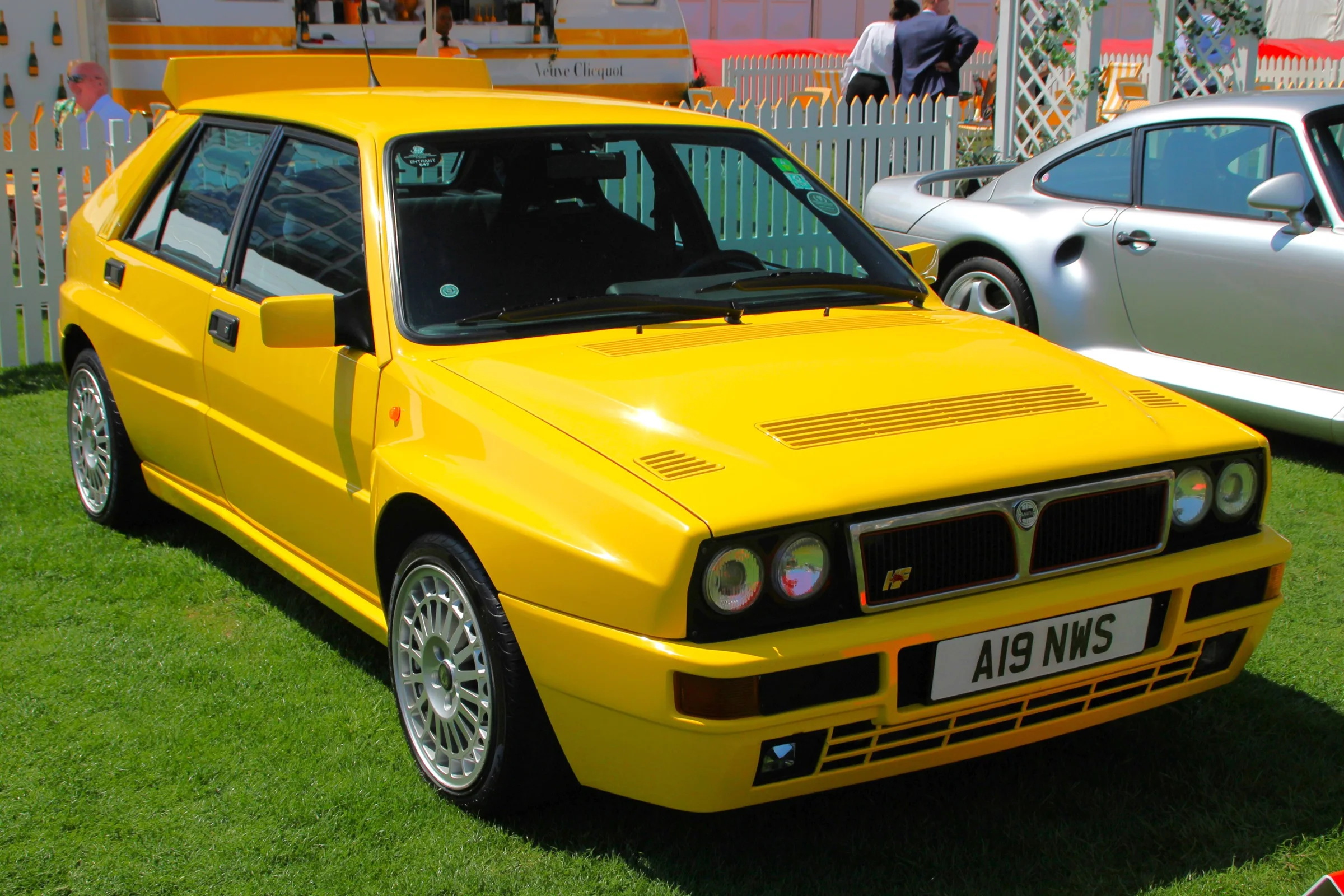
Photo: MrWalkr (CC BY-SA 4.0), source: Wikimedia Commons
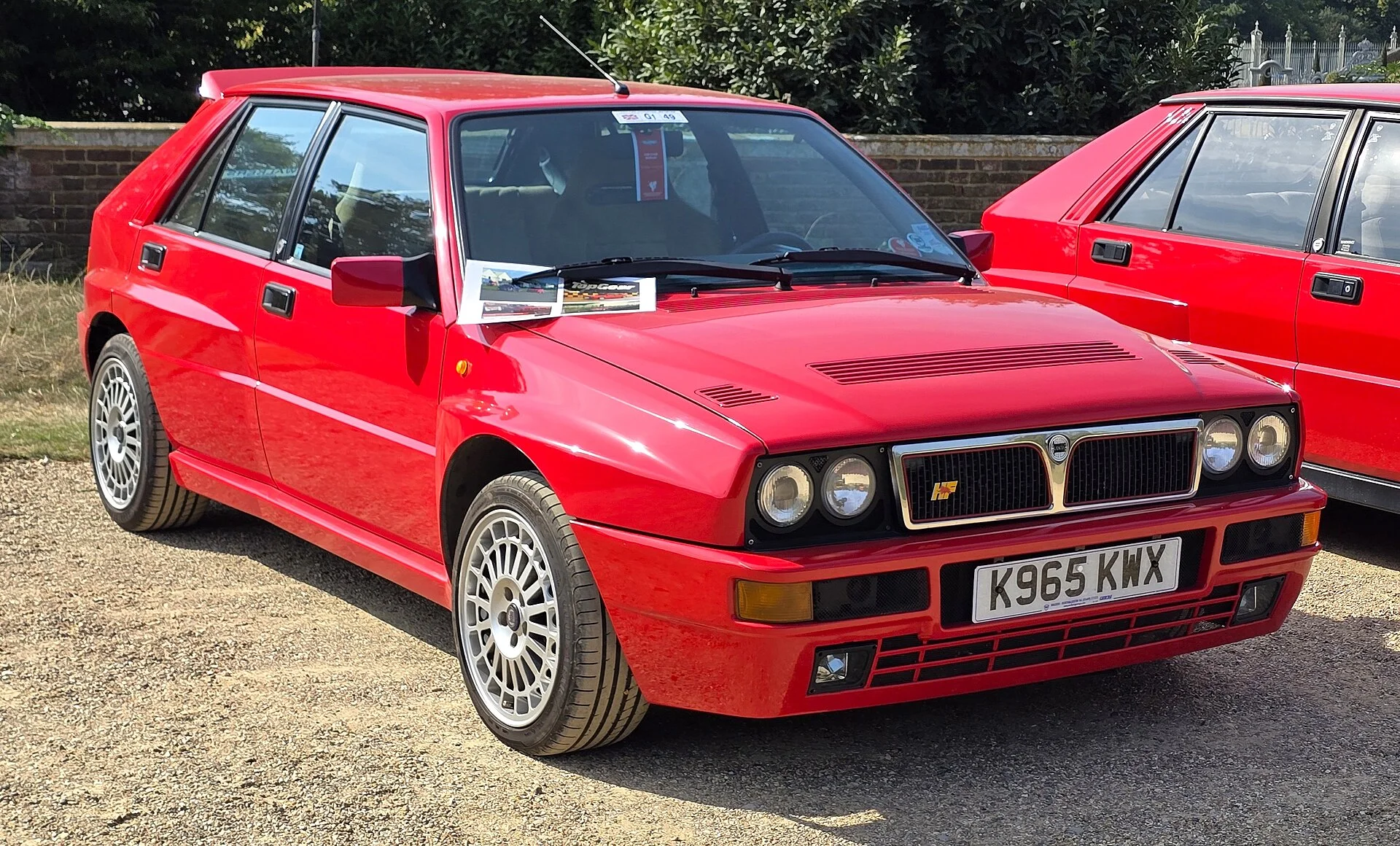
Photo: MrWalkr (CC BY-SA 4.0), source: Wikimedia Commons
The special editions
Lancia made the most of its success with a run of special editions, and these are now a collecting field of their own. On the Evoluzione came the Martini 5 (400 cars, marking the fifth title) and the Martini 6 (310 cars, the sixth), plus the Verde York and others. The Evo II brought the Giallo Ginestra, Blu Lagos, Club Hi.Fi and Dealers Collection editions, among others. The series ended with the Final Edition of 250 cars, painted in a deep red with Martini-style stripes. Numbers per edition differ slightly between sources, so the car's own documents and plaque are what count.
Production totals are also a matter of debate. Depending on the source, Lancia built somewhere around 44,000 to 47,000 four-wheel-drive Deltas across all versions. The 8V and 16V cars were made in the greatest numbers. Evoluzione IIs number only a few thousand, which is why they are the most valuable of the regular models.
What to check
- Rust. It is the main enemy. Look at the sills, wheel arches, strut tops, the area around the windscreen and the floor. Repairs on a car this valuable need to be done properly, so ask for photos of any restoration.
- History and originality. Many Integrales were modified, raced or rallied. Original specification and documents add a lot to value, especially on special editions.
- Drivetrain. Listen for noise from the centre and rear differentials and the transfer box, and check that the turbo builds boost cleanly without smoke.
- Origin. Large numbers of Integrales went to Japan when new, and many have since come back to Europe. That isn't a problem in itself, but it makes complete paperwork more important.
- Specialists. Parts and know-how are well supported by Integrale specialists, so a pre-purchase inspection by one is money well spent.
Why it matters
The Integrale is the rare collector car that actually earned its reputation in competition, and it remains one of the most rewarding cars of its era to drive on a twisting road. It is a reminder that Italian performance isn't only about Ferrari V12s. Prices for the best Evoluzione and Evo II cars have risen to supercar territory, while good 8V and 16V cars remain the accessible way into the story.