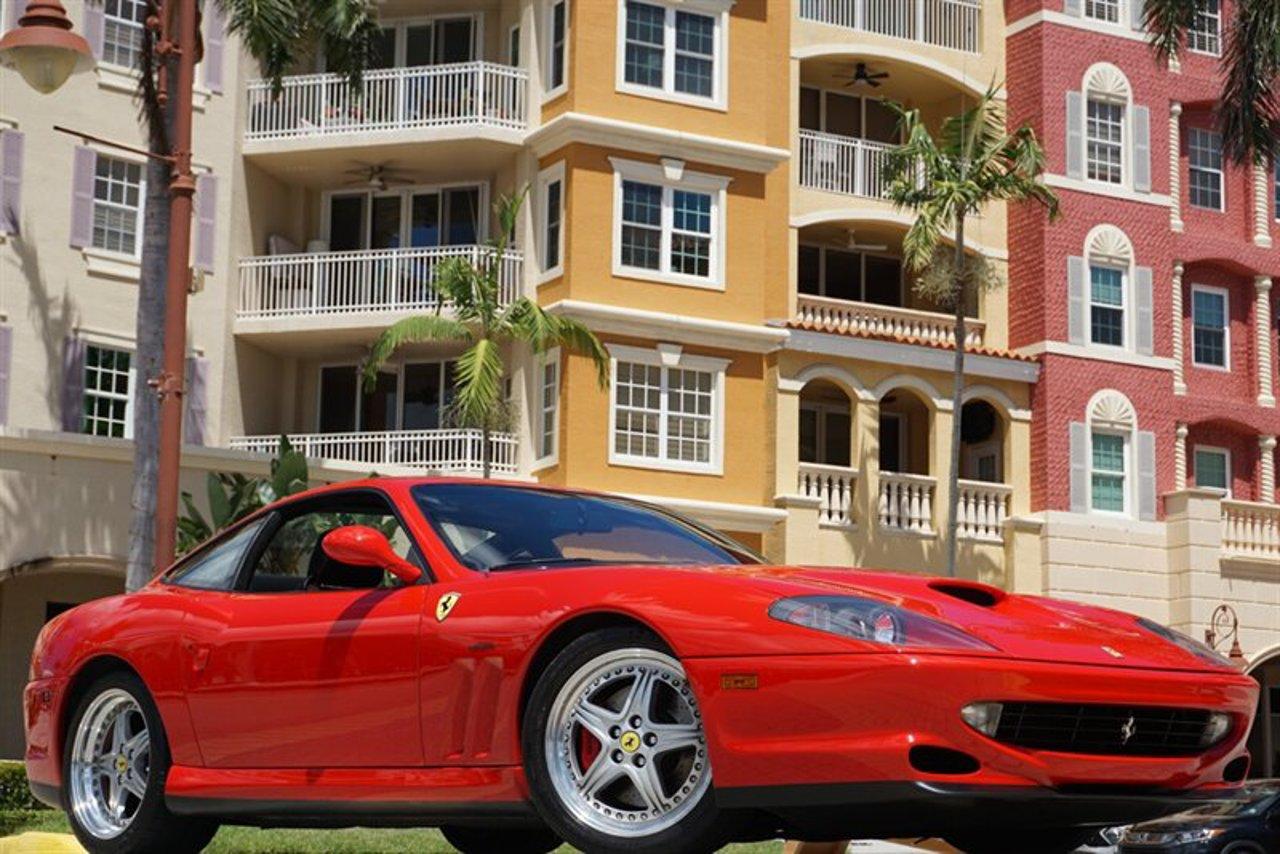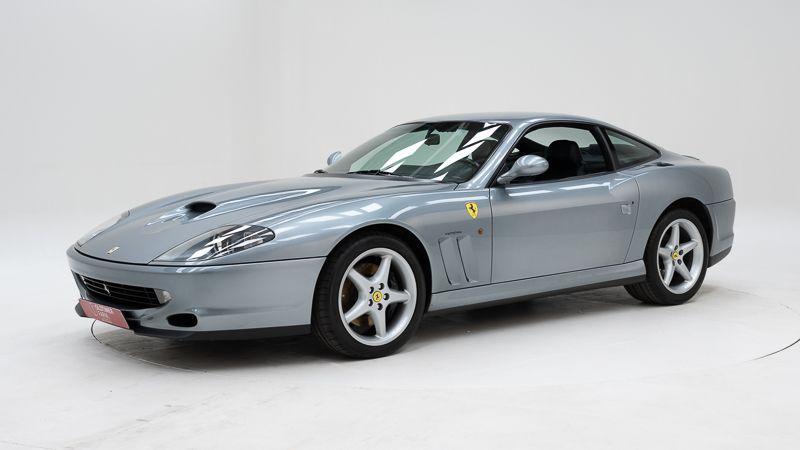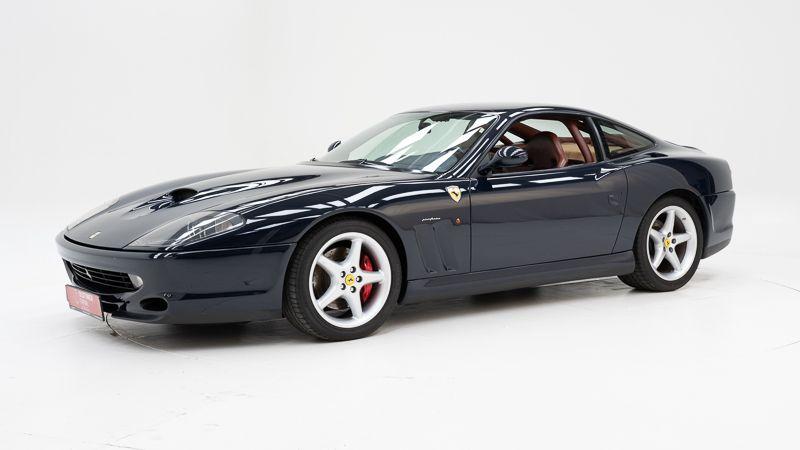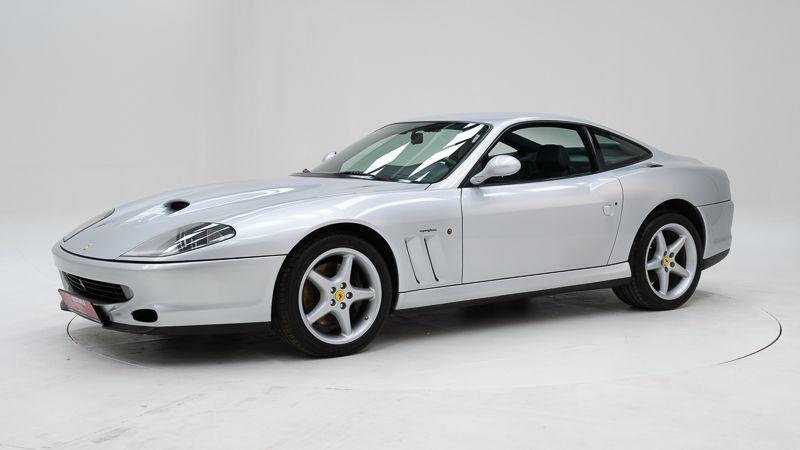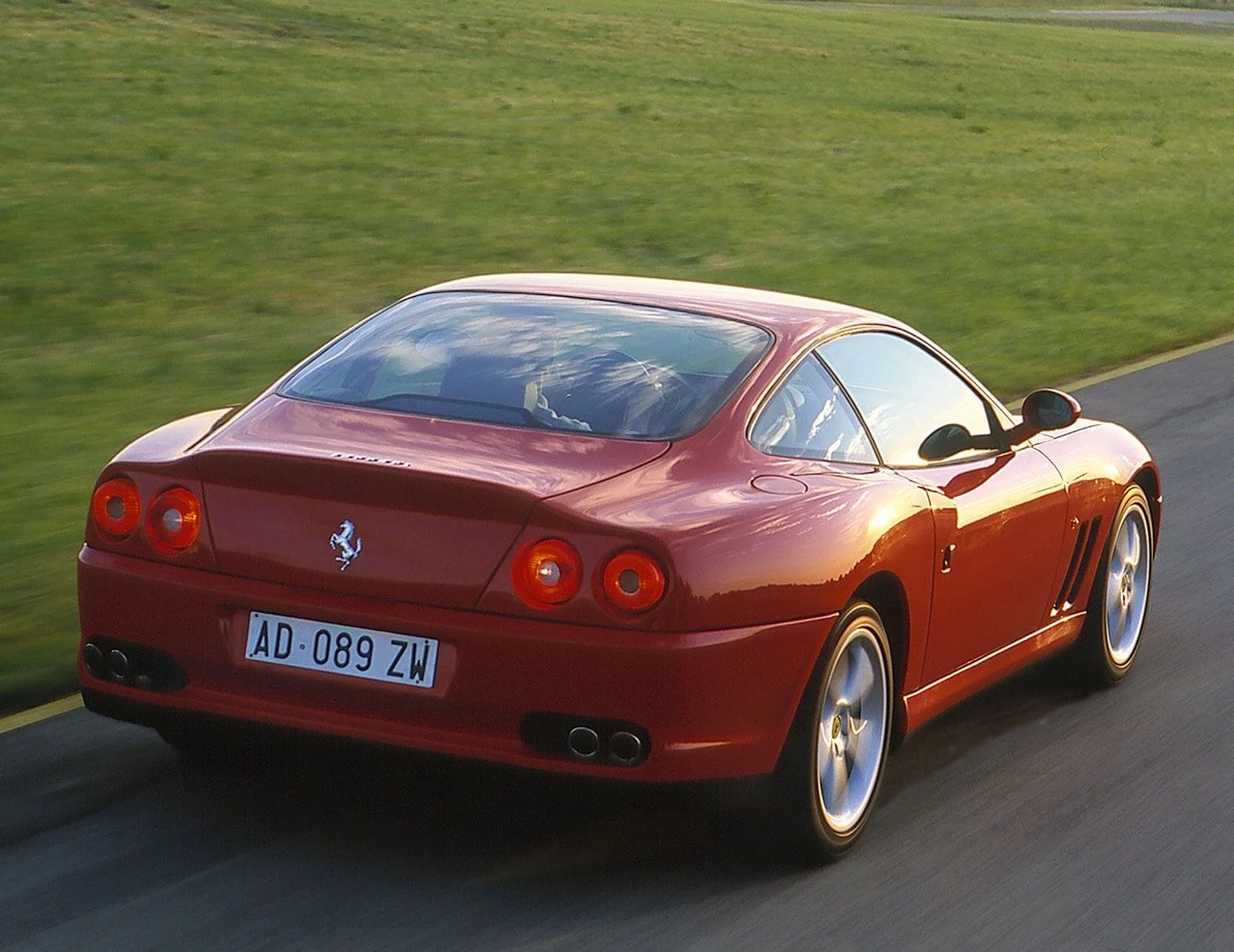
The 550 Maranello (1996–2001)
The 550's name gives you the engine, 5.5 litres, and the town where it was built. The 65-degree V12 sits behind the front axle. The six-speed manual gearbox is mounted at the rear in a transaxle, which gives the car close to 50:50 weight distribution. Underneath is a tubular steel chassis with largely aluminium bodywork designed by Pininfarina. Inside are two seats, a proper boot and a cabin designed for long distances. That was a deliberate break from the cramped, hot mid-engined flagships before it.
Ferrari 550 Maranello
- Production
- 1996–2001
- Engine
- 5,474cc 65° V12, front-mounted
- Power
- 485 CV at 7,000rpm
- Torque
- 568Nm at 5,000rpm
- Gearbox
- Six-speed manual transaxle
- Top speed
- Approx. 320km/h
- Built
- 3,083 (coupé), plus 448 Barchettas
Road testers praised the balance and the engine, which pulls cleanly from low revs and changes character above 4,000rpm. The only real complaint in period was fuel consumption. The 550's competition career shows how capable the chassis was: in privateer hands, most famously the Prodrive-built 550 GTS, it won the GTS class at the 2003 Le Mans 24 Hours.
Two derivatives are worth knowing. The 550 Barchetta Pininfarina of 2000 was a roadster limited to 448 cars. It had a cut-down windscreen and only a basic emergency soft-top, and it is now a separate, much more expensive market. Ferrari also built a small series of 550s celebrating the world speed records the car set in 1998. These are usually advertised with 'WSR' in the name and carry a premium when the history checks out.
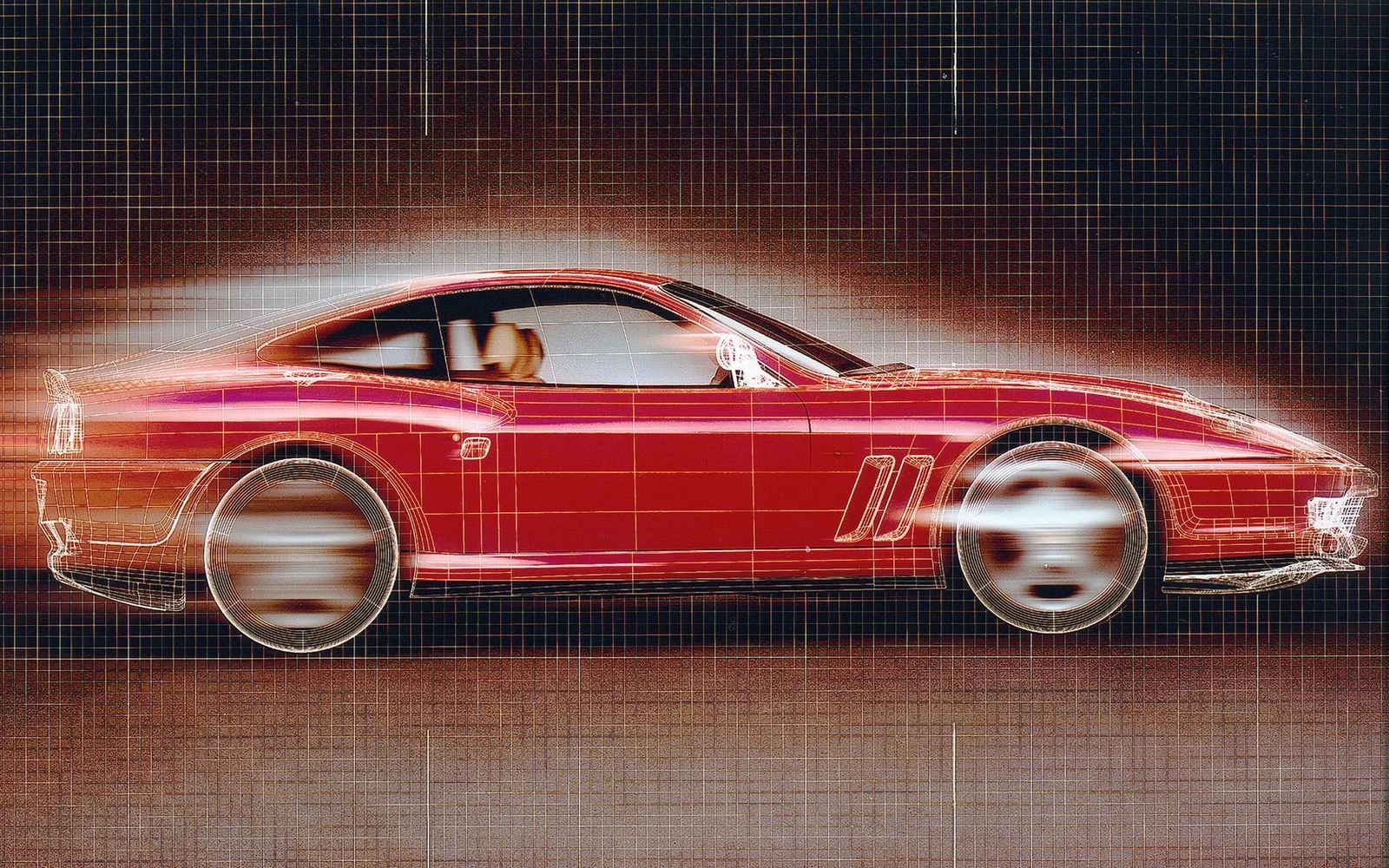
Photo: Ferrari S.p.A. (press image), source: ferrari.com
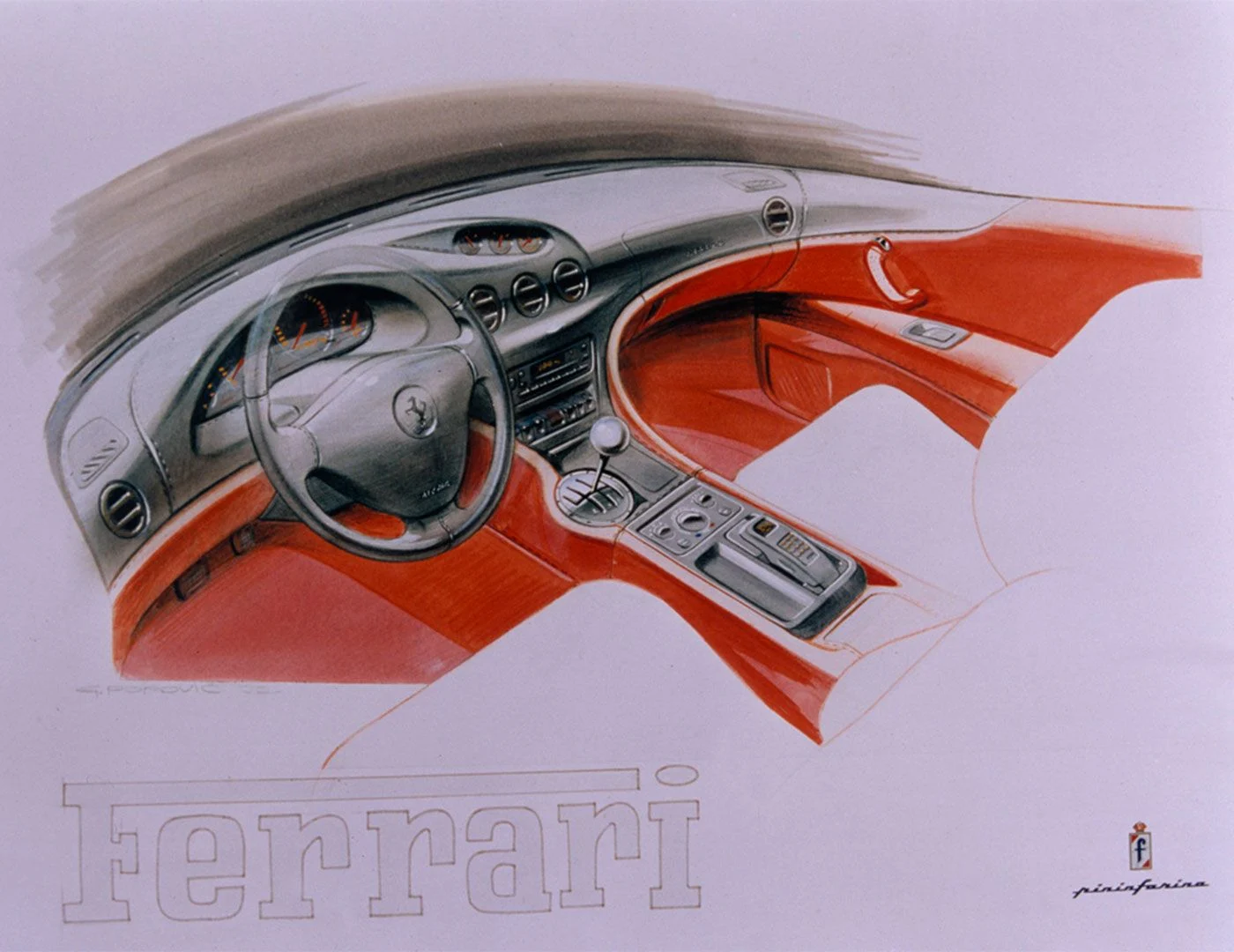
Photo: Ferrari S.p.A. (press image), source: ferrari.com
The 575M Maranello (2002–2006)
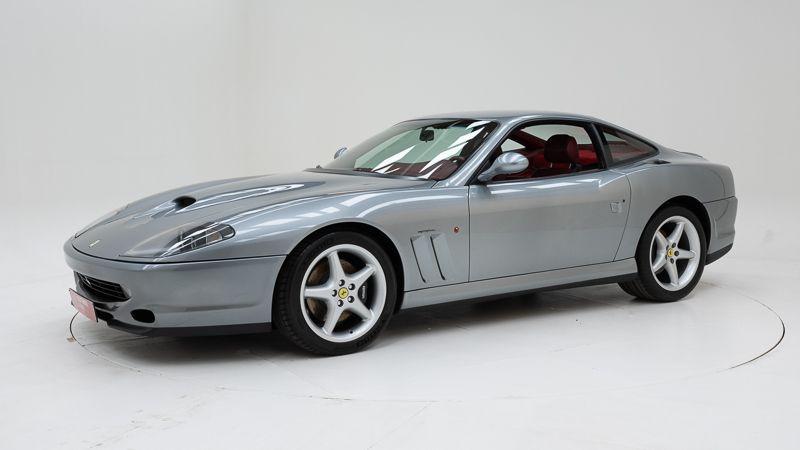
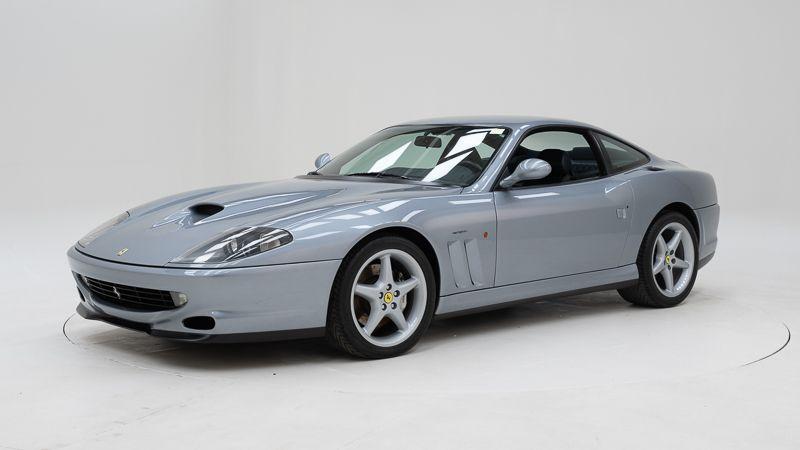
Shown at the 2002 Geneva motor show, the 575M ('M' for Modificata) was an evolution rather than a new car. Ferrari enlarged the V12 to 5.75 litres and 515 CV. It also added electronically adjustable suspension, stronger brake servo assistance, revised underbody aerodynamics and reinforced engine mounts. The nose and headlamps were tidied up, and the cabin got new instruments and a lighter, more modern finish.
The biggest change was the gearbox option. The 575M was the first twelve-cylinder Ferrari offered with the paddle-shift 'F1' automated manual. Buyers liked it: around eight in ten 575Ms were ordered with F1. Only 246 manual 575Ms were built out of a total of roughly 2,060 (sources quote 2,056 or 2,064). That is why a manual 575M is now the most sought-after version of the regular coupé.
Ferrari 575M Maranello
- Production
- 2002–2006
- Engine
- 5,748cc 65° V12, front-mounted
- Power
- 515 CV at 7,250rpm
- Torque
- 589Nm at 5,250rpm
- Gearbox
- Six-speed manual or six-speed F1 paddle-shift
- 0–100km/h
- Approx. 4.2 sec
- Built
- Approx. 2,060, of which 246 manual
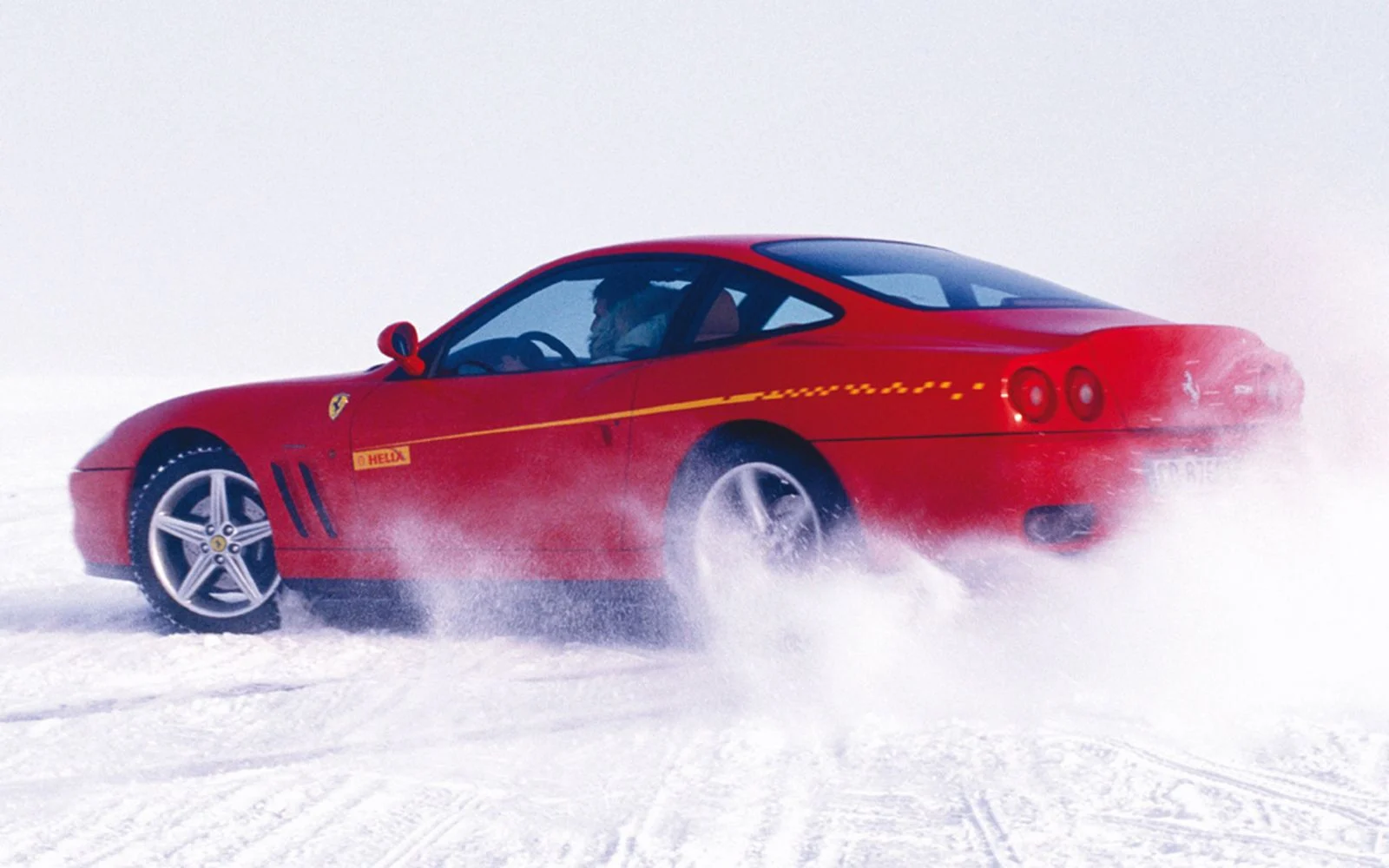
Photo: Ferrari S.p.A. (press image), source: ferrari.com
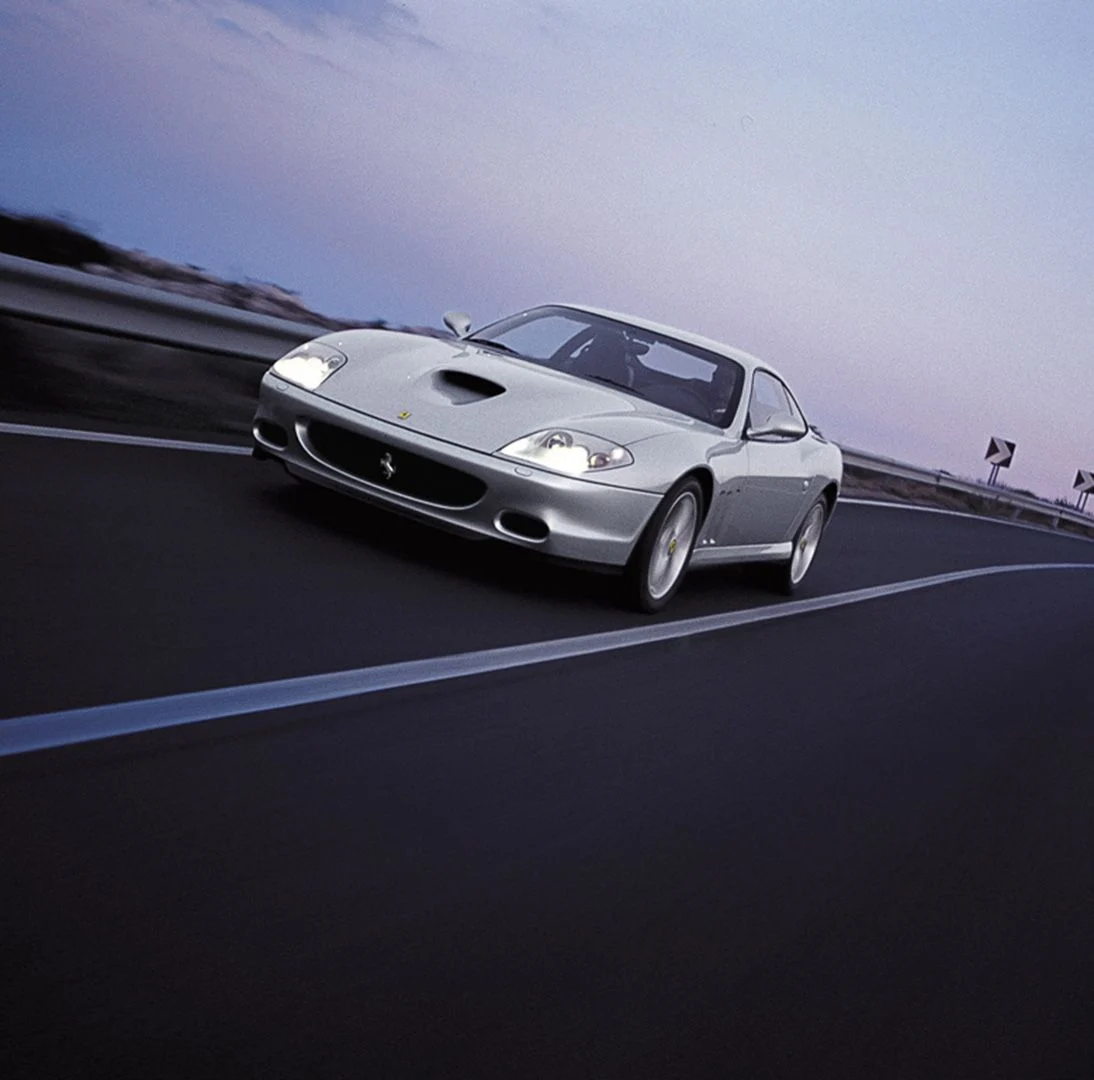
Photo: Ferrari S.p.A. (press image), source: ferrari.com
Fiorano and GTC handling packs
Many 575Ms carry the optional Fiorano Handling Package. It brought shorter, stiffer springs, a lower ride height, a thicker rear anti-roll bar, revised electronics, less steering assistance at low speeds, and red calipers with uprated pads. Red calipers could also be ordered on their own, so check the paperwork, not just the brakes.
In 2004 Ferrari announced a more serious Handling GTC package. It was named after the 575 GTC racing car and was the first time carbon-ceramic brakes appeared on a front-engined Ferrari. The pack added much stiffer springs and anti-roll bars, recalibrated dampers, a lighter exhaust, a quicker F1 gearbox calibration and carbon cabin trim. It was expensive when new and is rare today. A genuine, documented GTC car is worth seeking out.
The 575 Superamerica (2005–2006)
The Superamerica was a different idea: an open 575 that still drove like a coupé. Its roof was a single panel of electrochromic glass that rotated backwards through 180 degrees to lie over the boot. At the touch of a button it changed from clear to dark. Power rose to 540 CV. Production was limited to 559 cars, a number usually explained by Enzo Ferrari's rule of building one fewer car than the market wants. Only a few dozen had the manual gearbox; sources put the number at around 40.
A Superamerica is a great Ferrari, but check the roof thoroughly. Gas struts, glass, switches and the roof's control unit have all given trouble, and repairs are neither quick nor cheap.
550 or 575M: which one?
- The 550 is the purist's choice: every one has a manual gearbox, it has the more analogue feel, and on average it is the cheaper way into a manual V12 Ferrari.
- A 575M with the F1 gearbox is the easiest of the family to live with day to day, and the one most buyers find. Values are close to, or slightly above, those of the 550.
- A manual 575M combines the later car's extra power and refinement with three pedals. Fewer than 250 exist, and they sell at a clear premium.
- The Barchetta and Superamerica are collector cars in their own right, priced well above the coupés.
What to check before you buy
These are well-engineered cars, and the V12 is robust if it has been maintained. Most problems come from age and lack of use rather than design faults. A specialist pre-purchase inspection is still essential. These are the points that come up again and again in specialist buying guides:
- Cambelts. The V12 is belt-driven. Ferrari's original interval was three years, and later belt specifications allow five. Either way the change is time-based, not mileage-based. Ask which belts are fitted and when they were done.
- Cam seals. Weeping cam seals are common. A leak onto the belts shortens their life, and replacing the seals means removing the camshafts.
- Engine mounts and crank pulley. Vibration at idle points to tired mounts. Vibration while driving can mean a delaminating crank pulley.
- Clutch. On manual cars a high biting point or a noisy release bearing means a replacement is near; a clutch typically lasts 40,000–50,000 miles. On F1 cars, look for evidence of clutch and sensor work in the history.
- Cooling and hoses. Radiators can leak. Hoses in the vee of the engine suffer from heat, and replacing them is labour-intensive.
- Suspension. Upper wishbone bushes wear, especially if power-steering fluid has leaked onto them. Clonks over bumps are the symptom. A corner sitting low can mean a broken spring.
- Interior. The dashboard leather can shrink and pull away because of the adhesive used. The soft-touch coating on switches and door handles turns sticky. Both can be fixed, so treat them as negotiating points rather than reasons to walk away.
- Wheels on the 550. Original Speedline wheels were recalled and replaced with BBS items. Check that the car is on the correct wheels.
- Paperwork. A thick file from known specialists matters more than low mileage. Ferrari Classiche certification is a bonus on these cars, not a given.
The verdict
The 550 and 575M are the last front-engined V12 Ferraris with a gated manual gearbox. They have usable boots, and they cover long distances quickly. Prices have risen steadily, especially for manual 575Ms, but the best examples still cost less than many of their mid-engined contemporaries. Buy on condition and history rather than colour or mileage, budget for belts and a sorting service, and you get one of the most complete Ferraris ever built.